×
- Hello
- Login or Register
- Quick Links
- Live Chat
- Track Order
- Parts Availability
- RMA
- Help Center
- Contact Us
- Shop for
- BMW Parts
- BMW Accessories

My Garage
My Account
Cart
Genuine BMW 2500 Alternator
Generator- Select Vehicle by Model
- Select Vehicle by VIN
Select Vehicle by Model
orSeries
Model
Year
Select Vehicle by VIN
For the most accurate results, select vehicle by your VIN (Vehicle Identification Number).
2 Alternators found
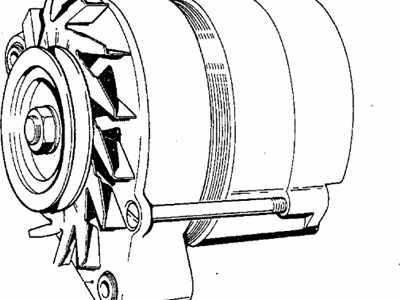
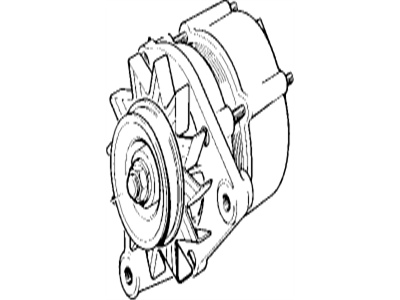
BMW 2500 Alternator
Using the rotation of the engine, the BMW 2500 Alternator supplies constant current to the battery of the sedan. The Alternator, contained in two cast aluminum halves, carries a belt-driven pulley and cooling fan at the front end and a rotor spinning inside a fixed set of stator windings. At the rear are brushes, diodes, and typically an onboard regulator. The pulley moves and the magnetic field of the Alternator rotor sweeps through the stator. This not only induces AC but also charges the rectifier diodes that quickly convert this AC into the DC stream the car needs. The field current is adjusted such that the voltage is maintained in a safe band. This prevents dim lights and boiled batteries. Usually, in BMW production versions, the unit delivers about 14 volts to match modern electronics. In every sedan of this generation, a crankshaft belt provides the mechanical energy, but the primary evolution concerns control strategy. The earlier 2500 model cars had an external regulator mounted at a separate location. The later 2500 model cars integrated a compact internal regulator within the Alternator, saving wiring and improving accuracy. This is the major design change for the Alternator in this series. In short, the Alternator keeps every BMW experience safe from flickering gauges and dead batteries.
If you are looking for OEM BMW 2500 Alternator, we highly recommend to shop with us. Not only do we offer budget friendly prices, but we also provide fast delivery. In addition, we have a hassle-free return policy on all genuine BMW 2500 Alternator that come backed by the manufacturer's warranty.
BMW 2500 Alternator Parts Questions & Experts Answers
- Q:What is the function and maintenance of an alternator on BMW 2500?Posted by Bonnie K.A:The alternator generates current for various electrical equipment and charges the battery while operating at all engine speeds, producing alternating current that is rectified to direct current by diodes in the casing. It is driven by a belt from the crankshaft pulley and requires minimal maintenance, primarily checking belt tension and the condition of wiring connections, while keeping the exterior clean, especially around ventilation holes. The alternator should never operate with a disconnected battery or reversed battery cables, and connections must be made carefully; disconnection is necessary before any electric welding on the vehicle, and starting the engine with a battery charger connected is prohibited to avoid damage to components, particularly diodes. Designed for long-lasting service, any faults should be addressed by a qualified service station or through the installation of a reconditioned unit. To test the alternator's charging capability, one can switch on the headlamps after dark and start the engine; if charging occurs, the headlamps will brighten as system voltage increases. If not charging, wiring and connections should be inspected, and if the ignition warning light remains on while the engine runs, a simple electrical test can be performed by disconnecting the regulator unit and joining specific wire connectors; if the warning light goes out, the regulator is defective, otherwise, the alternator needs servicing. For removal, the battery negative cable must be disconnected, followed by the disconnection of the multiple plug and single cable from the alternator, noting the wire connections. The alternator mounting bolts should be loosened, allowing the unit to swing towards the engine to release the drive belt before removing the alternator. Reinstallation follows the reverse order, ensuring proper belt tension adjustment.Answered by BMW Parts Specialist Tony / Apr 09, 2025
Related BMW 2500 Parts
 BMW 2500 Alternator Bearing
 BMW 2500 Alternator Brush
 BMW 2500 Starter Brush
 BMW 2500 Starter Drive
 BMW 2500 Voltage Regulator
 BMW 2500 Starter