×
- Hello
- Login or Register
- Quick Links
- Live Chat
- Track Order
- Parts Availability
- RMA
- Help Center
- Contact Us
- Shop for
- BMW Parts
- BMW Accessories

My Garage
My Account
Cart
Genuine BMW 325i Trailing Arm
Trailing Control Arm- Select Vehicle by Model
- Select Vehicle by VIN
Select Vehicle by Model
orSeries
Model
Year
Select Vehicle by VIN
For the most accurate results, select vehicle by your VIN (Vehicle Identification Number).
5 Trailing Arms found
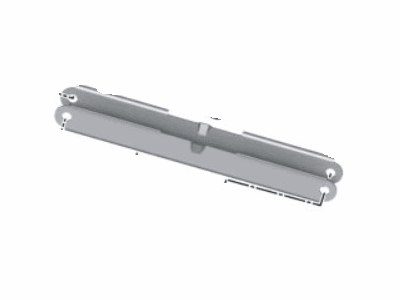
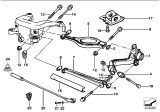
BMW 325i Repair Kit, Trailing Arm
Part Number: 33322406291$68.66 MSRP: $90.92You Save: $22.26 (25%)Ships in 1-3 Business Days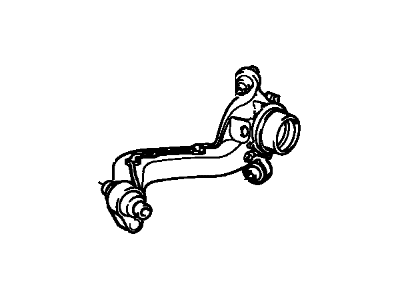
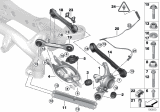
BMW 325i Left Trailing Arm
Part Number: 33326774777$886.19 MSRP: $1077.86You Save: $191.67 (18%)Ships in 1-3 Business DaysBMW 325i Right Trailing Arm
Part Number: 33326774778$886.19 MSRP: $1077.86You Save: $191.67 (18%)Ships in 1-3 Business Days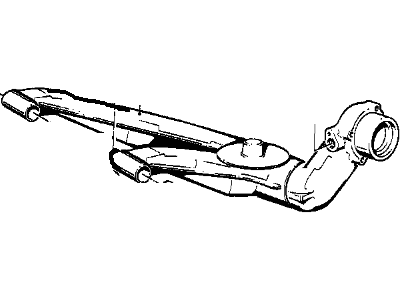
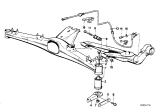
BMW 325i Left Trailing Arm
Part Number: 33321137641$2293.22 MSRP: $2789.20You Save: $495.98 (18%)Ships in 1-3 Business Days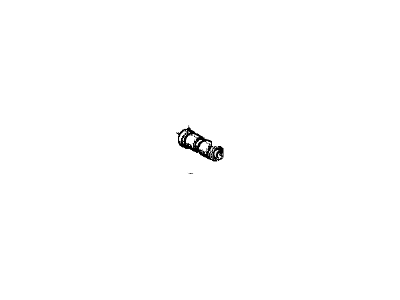
BMW 325i Trailing Arm
BMW 325i Trailing Arm is the sturdy connector that is applied to rest the rear axle onto the chassis and stabilize the wheel motion to provide secure handling. Across the production years of BMW 325i comes a Trailing Arm that pivots in front of the axle so the wheels go up and down with the bumps, keeping the alignment true and the tires planted. Early cars applied a simple Trailing Arm system with additional links or a Panhard rod to restrain the arm sideways. Later 325i models applied a semi Trailing Arm system with two pivot points, allowing each hub to have more freedom of movement and a sharper cornering feel. Both styles share strong steel construction and integrate bushings at the chassis mounts that allow controlled flex without harsh noise. This solution is in line with BMW suspension philosophy in that it minimizes the number of components but maximizes stability. When the bushings wear or when an impact bends the part, its replacement has the 325i steering predictably and even tire wear. By ensuring safe positioning for the axle, the Trailing Arm also frees under-floor space to the advantage of passenger and cargo room.
If you are looking for OEM BMW 325i Trailing Arm, we highly recommend to shop with us. Not only do we offer budget friendly prices, but we also provide fast delivery. In addition, we have a hassle-free return policy on all genuine BMW 325i Trailing Arm that come backed by the manufacturer's warranty.
BMW 325i Trailing Arm Parts Questions & Experts Answers
- Q:How to remove and overhaul the rear Trailing arms and struts on BMW 325i?Posted by Harry H.A:Block the front wheels and raise the rear of the vehicle, supporting it securely on jackstands. Remove the relevant wheel. To remove the trailing arm, discard the bolt securing it to the hub carrier and remove the nut and bolt securing it to the rear subframe. Discard the nuts. For the trailing arm, remove the bolts and detach it from the hub carrier and rear subframe. Discard the nuts. To remove the camber arm, first remove the rear coil spring. Then remove the bolts and shock absorber lower mount from the camber arm. Support the hub carrier with a floor jack and remove the nuts and arm-retaining bolts. Replace the self-locking nuts. Maneuver the camber arm out of the vehicle. For the traction strut, remove the bolt and detach the stabilizer bar link from the hub carrier. Remove the bolt securing the traction strut to the hub carrier and discard the bolt. Remove the nut and inner mounting bolt from the bracket. Discard the nut. Maneuver the traction strut out of the vehicle. To remove the toe arm, make alignment marks and remove the bolt securing it to the hub carrier. Remove the nut and pull the inner eccentric bolt from the subframe. Discard the self-locking nut. For the overhaul, thoroughly clean the arms/strut and the area around the mounts. Check for wear or damage and replace the mount bushings if necessary. Inspect the pivot bolts and replace as needed. For installation, replace all self-locking nuts and tighten all fasteners to their specified torque. Have the rear wheel alignment checked.Answered by BMW Parts Specialist Blaine / Jun 23, 2026