×
- Hello
- Login or Register
- Quick Links
- Live Chat
- Track Order
- Parts Availability
- RMA
- Help Center
- Contact Us
- Shop for
- BMW Parts
- BMW Accessories

My Garage
My Account
Cart
Genuine BMW 330i Flywheel
Clutch Flywheel- Select Vehicle by Model
- Select Vehicle by VIN
Select Vehicle by Model
orSeries
Model
Year
Select Vehicle by VIN
For the most accurate results, select vehicle by your VIN (Vehicle Identification Number).
7 Flywheels found
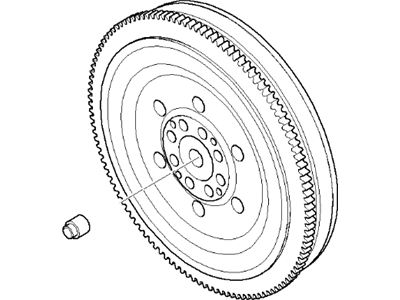
BMW 330i Twin Mass Flywheel
Part Number: 21217512474$1111.65 MSRP: $1548.34You Save: $436.69 (29%)Ships in 1-3 Business Days
BMW 330i Twin Mass Flywheel
Part Number: 21207533868$961.71 MSRP: $1339.50You Save: $377.79 (29%)Ships in 1-3 Business Days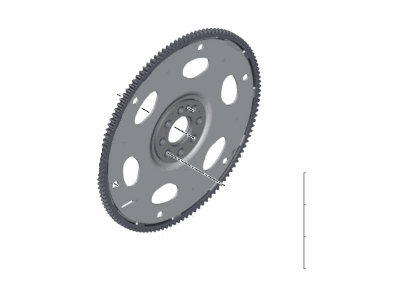
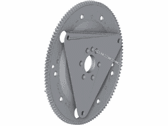
BMW 330i Flywheel Automatic
Part Number: 11228612144$730.92 MSRP: $901.70You Save: $170.78 (19%)Ships in 1-3 Business Days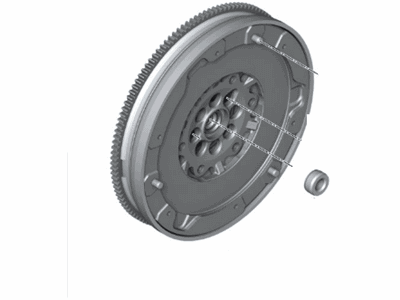
BMW 330i Twin Mass Flywheel
Part Number: 21207573785$1292.57 MSRP: $1800.34You Save: $507.77 (29%)Ships in 1-3 Business Days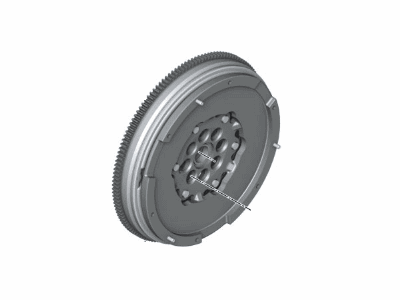
BMW 330i Twin Mass Flywheel
Part Number: 21208671022$1413.76 MSRP: $1969.13You Save: $555.37 (29%)Ships in 1-3 Business Days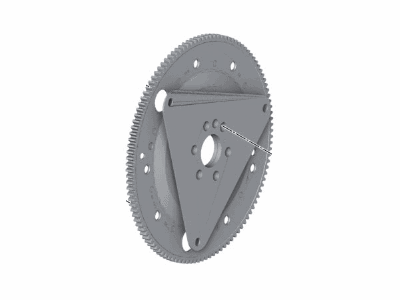
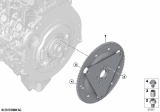
BMW 330i Flywheel Automatic
Part Number: 11227548102$696.11 MSRP: $858.76You Save: $162.65 (19%)Ships in 1-3 Business Days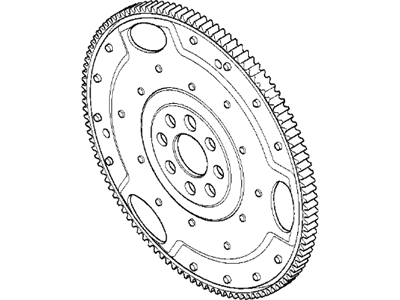
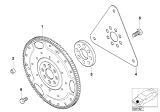
BMW 330i Flywheel
Part Number: 11227508000$558.38 MSRP: $669.71You Save: $111.33 (17%)Ships in 1-3 Business Days
BMW 330i Flywheel
The BMW 330i Flywheel is like the car's kinetic battery, absorbing the rotational energy so that the engine speed remains steady when the clutch is opened. Bolted to the crankshaft just ahead of the clutch disc, the Flywheel resists sudden drops in rpm, smooths out power pulses, and is equipped with a toothed ring gear, grasped by the starter to crank the engine. In varying 330i generations, BMW offered two main Flywheel styles, a traditional single mass steel plate and a dual mass version with a spring damped secondary plate as a sandwich. The single mass design is lighter and provides sharper throttle response, but it sends more vibration through the driveline, while the dual mass provides a cushioning effect and quells gear chatter as well as protecting the gearbox. In terms of everyday 330i sedans, the dual mass became common as it tames noise at low speed, but performance-minded drivers like the direct feel of the single mass. Whichever version you find, each Flywheel has to remain perfectly balanced, as cracks or lost metal could unleash stored energy. By combining the engine, clutch, and Flywheel, BMW ensures smooth launches and reliable starts.
If you are looking for OEM BMW 330i Flywheel, we highly recommend to shop with us. Not only do we offer budget friendly prices, but we also provide fast delivery. In addition, we have a hassle-free return policy on all genuine BMW 330i Flywheel that come backed by the manufacturer's warranty.
BMW 330i Flywheel Parts Questions & Experts Answers
- Q:How to replace the flywheel/driveplate in 3.0L six cylinder engine on BMW 330i?Posted by Kameron B.A:Necessary, always install new flywheel/driveplate retaining bolts on replacement. On manual transmission models, the clutch assembly should be removed. In automatic transmission models, remove the transmission and torque converter. Stop the flywheel/driveplate from turning by locking the ring gear teeth with a similar arrangement. Otherwise, use a strap to bolt between the flywheel/driveplate and the cylinder block/crankcase. Slacken off and undo all securing screws, then remove flywheel/driveplate while noting its locating dowel; (take care - it is very heavy). Discard bolts after loosening them as they must be replaced every time they are used again. If deeply scratched or cracked or damaged otherwise on the surface where it mates with the clutch plate, replace this flywheel unless it can still be ground flat again.. Such matter is beyond your capability hence consult any BMW dealer or engine reconditioning specialist in this case. Replace ring gear if badly worn orhas missing teeth . Let a BMW dealer or engine reconditioning specialist perform this task for great results. All manual transmission models have dual-mass flywheels installed in them.Followed by manufacturer there aren't published procedures of checking anything about it but turn inner mass one full turn counter clockwise then mark its position relative to outer mass , reverse rotate it clockwise by hand and measure travel distance moved at outer edge. In general when more than 1-3/16 inch (30mm) of travel movement occurs or less than 19/32-inch (15mm), ask whether new one is needed from any dealer or maybe some expert in transmissions.Clean both mating surfaces of crankshaft and flywheel/ drive-plate as well as clear all traces of locking compound from crankshaft threaded holes.The installation of the flay-wheel/drive-plate on crankshaft includes engaging with locating dowel plus fitting new retaining bolts.Note: use a little bit of locking compound if the new bolts are not pre-coated before installing. Again, lock the flywheel/driveplate exactly as in removal then tighten all screws according to the specified torque setting but in a diagonal sequence. Finally, fit either the automatic transmission or clutch assembly hosing it together with torque converter.Answered by BMW Parts Specialist Adrian / Dec 29, 2025