×
- Hello
- Login or Register
- Quick Links
- Live Chat
- Track Order
- Parts Availability
- RMA
- Help Center
- Contact Us
- Shop for
- BMW Parts
- BMW Accessories

My Garage
My Account
Cart
Genuine BMW X3 Brake Master Cylinder
- Select Vehicle by Model
- Select Vehicle by VIN
Select Vehicle by Model
orSeries
Model
Year
Select Vehicle by VIN
For the most accurate results, select vehicle by your VIN (Vehicle Identification Number).
5 Brake Master Cylinders found
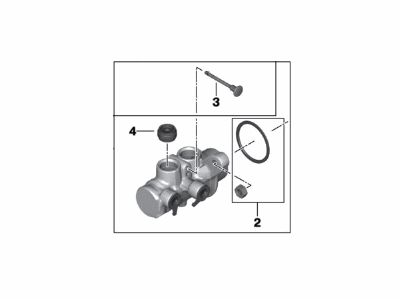
BMW X3 Brake Master Cylinder Repair Kit
Part Number: 34336881095$369.36 MSRP: $510.05You Save: $140.69 (28%)Ships in 1-3 Business Days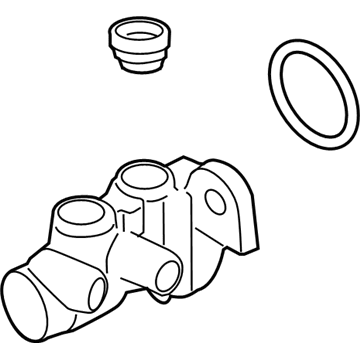
BMW X3 Brake Master Cylinder
Part Number: 34336857872$370.82 MSRP: $512.06You Save: $141.24 (28%)Ships in 1-3 Business Days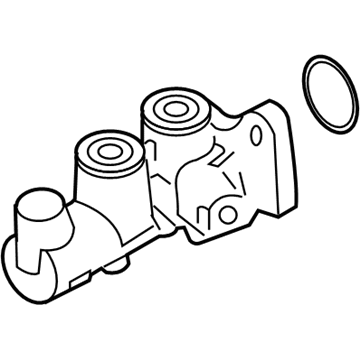
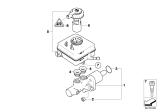
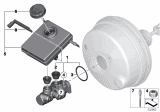
BMW X3 Brake Master Cylinder
Part Number: 34336786629$477.57 MSRP: $665.18You Save: $187.61 (29%)Ships in 1-3 Business DaysBMW X3 Brake Master Cylinder
Part Number: 34336871455$366.02 MSRP: $505.44You Save: $139.42 (28%)Ships in 1-3 Business Days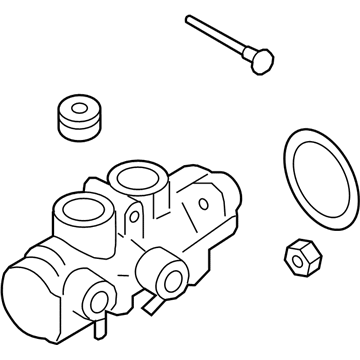
BMW X3 Brake Master Cylinder Repair Kit
Part Number: 34336881616$419.35 MSRP: $579.08You Save: $159.73 (28%)Ships in 1-3 Business Days
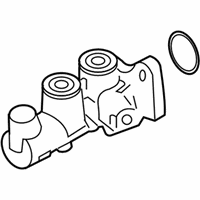
BMW X3 Brake Master Cylinder
The BMW X3 Brake Master Cylinder takes the force applied to the brake pedal and changes it into precisely controlled hydraulic pressure that brings the SUV to a safe stop. Located inside its aluminum or cast iron housing, the Brake Master Cylinder contains dual pistons and their resilient seals and return springs, which feed into separate circuits so that, in the event of a single hydraulic system failure, partial braking can still be maintained. Many models of the BMW X3 have the Brake Master Cylinder mounted on the vacuum booster in front of the firewall, connected to an external plastic fluid reservoir sealed by O-rings, although earlier cast iron units sometimes applied an integral reservoir with a single bail secured cap. When the driver presses the pedal in a BMW X3, a pushrod pushes the Brake Master Cylinder pistons along, which compresses a fluid that flows over metal lines and flexible hoses to calipers or drums and then slows down the wheels. Lifting the pedal causes the Brake Master Cylinder springs to withdraw and draw fluid back through refill ports, keeping the system full. Seal wear or internal corrosion is the reason why the BMW X3 requires regular fluid changes to help avoid a low pedal.
If you are looking for OEM BMW X3 Brake Master Cylinder, we highly recommend to shop with us. Not only do we offer budget friendly prices, but we also provide fast delivery. In addition, we have a hassle-free return policy on all genuine BMW X3 Brake Master Cylinder that come backed by the manufacturer's warranty.
BMW X3 Brake Master Cylinder Parts Questions & Experts Answers
- Q:What are the steps involved in removing and reinstalling the brake master cylinder and brake fluid reservoir on BMW X3?Posted by Ann N.A:Brake fluid is highly corrosive and dangerous to the environment, so it must be disposed of properly. Begin by removing the heater bulkhead and partition wall near the reservoir. When working at the brake fluid reservoir located at the left rear of the engine compartment, detach the brake fluid level sensor connector and remove the reservoir cap. Use a clean syringe to empty the brake fluid reservoir. For manual transmission vehicles, disconnect the clutch brake master cylinder supply line from the fluid reservoir, being prepared to catch any dripping fluid, and secure the supply line in a vertical position to prevent excessive fluid loss. Plug open brake fluid lines and ducts to prevent leakage and contamination. Remove the brake fluid reservoir by pulling it vertically out of the brake master cylinder, then disconnect the brake master cylinder brake lines and plug them to prevent contamination. Remove the brake master cylinder mounting nuts and take out the cylinder. During reinstallation, ensure that all nuts, fluid couplings, thread bores, and mating surfaces are clean. Mount the brake master cylinder to the brake booster using a new sealing O-ring and new self-locking nuts, then connect the brake fluid lines to the brake master cylinder and reinstall the fluid reservoir with new sealing grommets. It is important to align the brake master cylinder pushrod and booster pushrod, and avoid over-torquing the brake master cylinder mounting nuts to prevent damage to the brake booster and ensure proper vacuum build-up. Reconnect the clutch fluid supply hose if applicable, and complete the installation in reverse order of removal. Finally, top up with fresh brake fluid and bleed the entire brake system.Answered by BMW Parts Specialist Blaine / Dec 14, 2025
Related BMW X3 Parts


Browse by Year
2024 Brake Master Cylinder 2023 Brake Master Cylinder 2022 Brake Master Cylinder 2021 Brake Master Cylinder 2020 Brake Master Cylinder 2019 Brake Master Cylinder 2018 Brake Master Cylinder 2017 Brake Master Cylinder 2016 Brake Master Cylinder 2015 Brake Master Cylinder 2014 Brake Master Cylinder 2013 Brake Master Cylinder 2012 Brake Master Cylinder 2011 Brake Master Cylinder 2010 Brake Master Cylinder 2009 Brake Master Cylinder 2008 Brake Master Cylinder 2007 Brake Master Cylinder 2006 Brake Master Cylinder 2005 Brake Master Cylinder 2004 Brake Master Cylinder