×
- Hello
- Login or Register
- Quick Links
- Live Chat
- Track Order
- Parts Availability
- RMA
- Help Center
- Contact Us
- Shop for
- BMW Parts
- BMW Accessories

My Garage
My Account
Cart
Genuine BMW Z4 Parking Brake Shoe
Emergency Parking Brake Shoe- Select Vehicle by Model
- Select Vehicle by VIN
Select Vehicle by Model
orSeries
Model
Year
Select Vehicle by VIN
For the most accurate results, select vehicle by your VIN (Vehicle Identification Number).
1 Parking Brake Shoe found
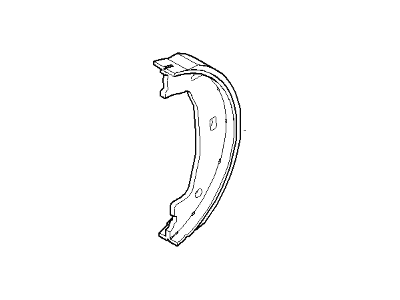
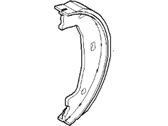
BMW Z4 Repair Kit Brake Shoe Asbestos-Free
Part Number: 34416761291$221.17 MSRP: $323.71You Save: $102.54 (32%)Ships in 1-3 Business Days
BMW Z4 Parking Brake Shoe
The BMW Z4 Parking Brake Shoe is the crucial part responsible for the necessary clamping force that holds the roadster in place when you park it to prevent roll during slopes or when you store your roadster for an extended period. On the inside of many Z4 rear hubs is a small drum that is nested inside the rotor in which a pair of Parking Brake Shoes push outwards via cable or electronic motor when the driver pulls the lever or allows the auto set feature to operate, converting mechanical tension to friction to lock the wheels in place. Earlier Z4 generations applied purely cable-pulled linkages, and later BMW models of the same line introduced electronic parking brakes which spin small motors to draw the same cables or move dedicated caliper pistons, leaving the basic design of the Parking Brake Shoe unchanged but providing much quicker engagement and automatic activation when the transmission selects Park. Regardless of the style of actuation, each Parking Brake Shoe has high friction lining in a shape that fits the miniature drum, so stopping power is independent of the hydraulic service brakes, and every BMW owner can still tug the lever for controlled slides. Regular exercise of the Parking Brake Shoe keeps the components free, maintains bite, and allows the drivers of BMW Z4 to trust their Parking Brake Shoe hold.
If you are looking for OEM BMW Z4 Parking Brake Shoe, we highly recommend to shop with us. Not only do we offer budget friendly prices, but we also provide fast delivery. In addition, we have a hassle-free return policy on all genuine BMW Z4 Parking Brake Shoe that come backed by the manufacturer's warranty.
BMW Z4 Parking Brake Shoe Parts Questions & Experts Answers
- Q:How to remove and install the Parking Brake Shoe on BMW Z4?Posted by Hang C.A:Among the precaution measures you should always follow, then take note of the following before commencing the work. Start as mentioned above, by first and foremost, removing the rear Brake Disc and remember the Installed position of all the component. The parking brake shoe return springs can now be noiselessly and carefully unhooked and pulled out with the use of pliers. Pry downwards on the shoes, and turn the shoe retaining pins 90 degrees anticlockwise to release them and lift them out, along with the springs. Remove both parking brake shoes and copy the position of the shoe adjuster mechanism, to restore it later. Check the parking brake shoes for any signs of wear or contamination and in case of any wear, the shoes should be replaced, in addition, the return springs should also be replaced as a precaution. Lay down the car and with the shoes off, clean and inspect shoe adjuster and expander and replace them in case they are faded or damaged. If all these areas are in good condition, it is recommended that new brake grease is applied to the threads of the adjuster and the sliding surfaces of the expander mechanism but this should not come into contact with the shoe friction material. For installation, clean the backing plate and apply a small amount of high-temp brake grease or anti-seize to the interfaces which come to touching the shoes except for the friction material. It fits the parking brake shoes in the right position and fastens with the retaining pins and springs. Make sure the lower ends of the shoes will sit securely and lock over the expander, then insert the adjuster mechanism dovetailing into the upper ends of the shoes. Make sure that all the parts were assembled properly and screw the upper and lower return springs in place with a pair of pliers. Place the parking brake shoes and bolt the brake disc, set the parking brake and then fit the wheel.Answered by BMW Parts Specialist Brad / May 06, 2026