×
- Hello
- Login or Register
- Quick Links
- Live Chat
- Track Order
- Parts Availability
- RMA
- Help Center
- Contact Us
- Shop for
- BMW Parts
- BMW Accessories

My Garage
My Account
Cart
Genuine BMW 2002 Clutch Master Cylinder
- Select Vehicle by Model
- Select Vehicle by VIN
Select Vehicle by Model
orSeries
Model
Year
Select Vehicle by VIN
For the most accurate results, select vehicle by your VIN (Vehicle Identification Number).
2 Clutch Master Cylinders found
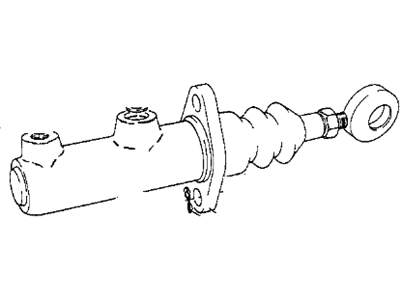
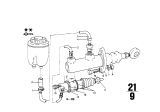
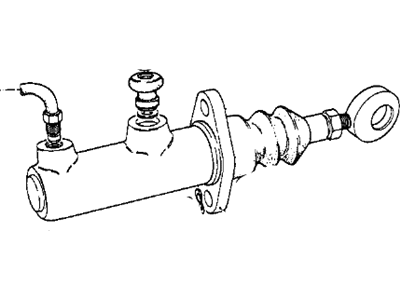
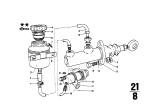
BMW 2002 Clutch Master Cylinder
The Clutch Master Cylinder of BMW 2002 converts the pressure put on the pedal into hydraulic force so the gearbox can smoothly disengage and reengage on every shift. The Clutch Master Cylinder has a piston that drives fluid through a line toward the slave cylinder, and the piston in the slave cylinder moves the release arm that releases the clutch disc from the flywheel so it can change gear without grinding them. It is fixed to the firewall and linked to the clutch pedal directly. As the driver continuously presses and releases the clutch pedal, the cycle repeats itself. The Clutch Master Cylinder has a direct effect on pedal feel, shift effort, and general drivability. Any leaks or worn seals cause the pedal to feel spongy or trouble with gear engagement. Throughout the production run of the 2002 models, BMW chose to retain a single hydraulic 2002 Clutch Master Cylinder design rather than switch to mechanical or cable designs. As such, the differences were primarily just in minor mounting details rather than on operating principle. Consequently, the parts are interchangeable among much of the 2002s. Routine fluid checks ensure the Clutch Master Cylinder remains responsive and help retain a character that old-school BMW owners enjoy.
If you are looking for OEM BMW 2002 Clutch Master Cylinder, we highly recommend to shop with us. Not only do we offer budget friendly prices, but we also provide fast delivery. In addition, we have a hassle-free return policy on all genuine BMW 2002 Clutch Master Cylinder that come backed by the manufacturer's warranty.
BMW 2002 Clutch Master Cylinder Parts Questions & Experts Answers
- Q:How to remove and repair a clutch master cylinder on BMW 2002?Posted by Mat P.A:On many models, the clutch and brake fluid reservoirs are combined. With this design, syphon out some fluid until it falls to the minimum level and then disconnect the feed pipe to the clutch master cylinder. On later models with independent clutch and brake reservoirs, either syphon out all the fluid from the clutch reservoir or disconnect the feed pipe to the clutch master cylinder and drain the reservoir completely. Disconnect the pipe which runs from the clutch master cylinder to the slave cylinder. Depress the clutch pedal several times to expel fluid from the clutch master cylinder. Working inside the car, disconnect the clutch master cylinder pushrod from the clutch pedal. Unscrew and remove the clutch master cylinder mounting nuts which are accessible within the car and withdraw the unit. Prior to dismantling, clean all dirt from external surfaces. Peel back the rubber boot from the rear end of the clutch master cylinder and extract the circlip. Withdraw the pushrod assembly, piston and spring. Wash all components in methylated spirit or clean hydraulic fluid - nothing else must be used. Examine the surfaces of piston and cylinder bore and if there are scratches, scoring or 'bright' wear areas evident then the clutch master cylinder must be renewed complete. If the components are in good condition, discard all rubber seals and obtain the appropriate repair kit. Install the seals using the fingers only to manipulate them into position and then dip the components in clean hydraulic fluid before installing into the cylinder. Installation is a reversal of removal but bleed the clutch hydraulic system.Answered by BMW Parts Specialist Javier / Nov 15, 2023