×
- Hello
- Login or Register
- Quick Links
- Live Chat
- Track Order
- Parts Availability
- RMA
- Help Center
- Contact Us
- Shop for
- BMW Parts
- BMW Accessories

My Garage
My Account
Cart
Genuine BMW 325i Batteries
Car Battery- Select Vehicle by Model
- Select Vehicle by VIN
Select Vehicle by Model
orSeries
Model
Year
Select Vehicle by VIN
For the most accurate results, select vehicle by your VIN (Vehicle Identification Number).
20 Batteries found
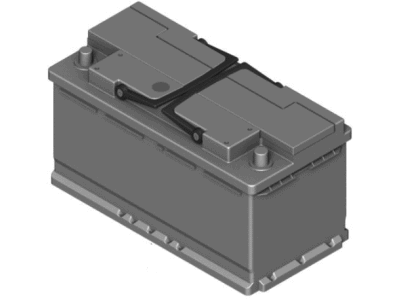
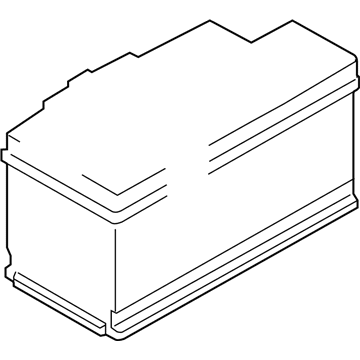
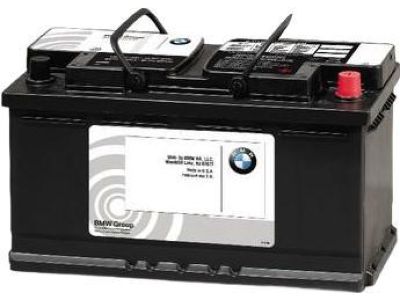
BMW 325i Battery, Manuf.: Exide (Warranty Only)
Part Number: 61217553952$146.66 MSRP: $166.00You Save: $19.34 (12%)Ships in 1-3 Business Days
BMW 325i Battery, Manuf.: Douglas (Warranty Only)
Part Number: 61218381720$98.54 MSRP: $117.50You Save: $18.96 (17%)Ships in 1-3 Business Days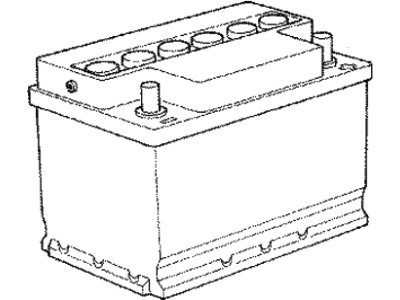
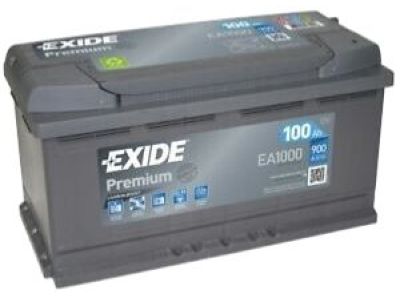
BMW 325i Battery, Manuf.: Exide (Warranty Only)
Part Number: 61217567181$100.82 MSRP: $112.21You Save: $11.39 (11%)Ships in 1-3 Business Days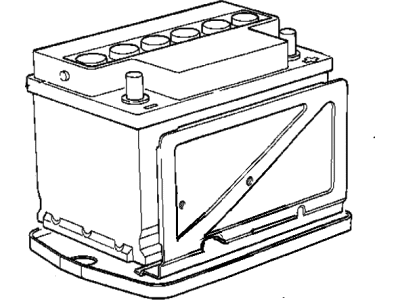
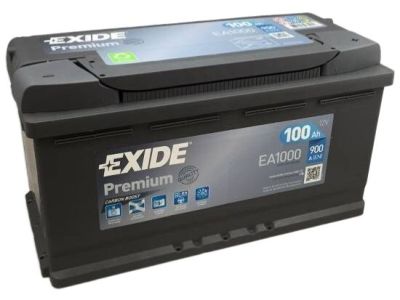
BMW 325i Battery, Manuf.: Exide (Warranty Only)
Part Number: 61217567182$110.90 MSRP: $123.42You Save: $12.52 (11%)Ships in 1-3 Business Days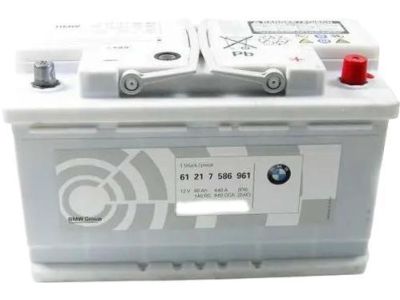
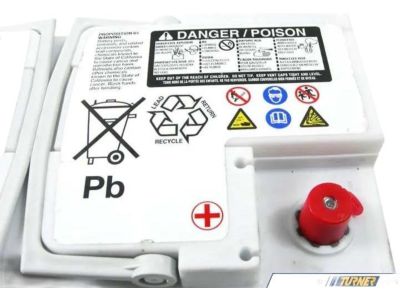
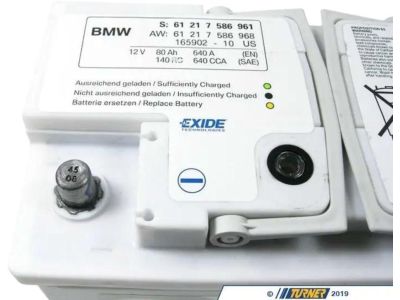
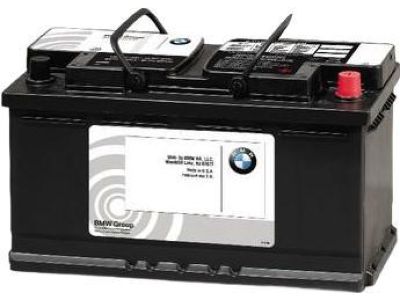
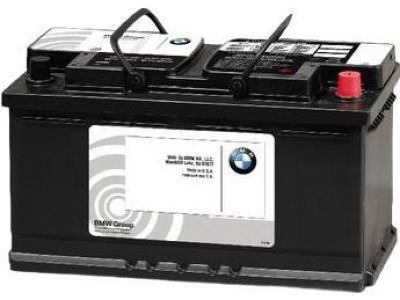
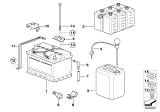
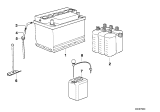
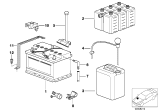
BMW 325i Batteries
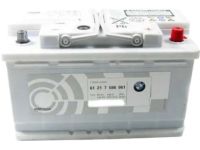
If you are looking for OEM BMW 325i Batteries, we highly recommend to shop with us. Not only do we offer budget friendly prices, but we also provide fast delivery. In addition, we have a hassle-free return policy on all genuine BMW 325i Batteries that come backed by the manufacturer's warranty.
BMW 325i Batteries Parts Questions & Experts Answers
- Q: How to disconnect and reconnect battery on BMW 325i?A:Always disconnect the cable from the negative battery terminal first and hook it up last to avoid shorting the battery. The negative cable connector of the battery has an Intelligent Battery Sensor (IBS), so do not pry under it or attach any other ground wires to the negative cable end. Some systems on the vehicle require battery power to be available at all times, such as the alarm system, power door locks, or to maintain control unit memory. When the battery is disconnected, the power that maintains these systems is cut. Therefore, remove the key from the ignition and keep it with you to avoid it getting locked inside. Devices known as "memory-savers" can be used to avoid some of these problems. The typical memory saver is plugged into the cigarette lighter and is connected to a spare battery. Then the vehicle battery can be disconnected from the electrical system. To disconnect the battery, loosen the cable end bolt and disconnect the cable from the negative battery terminal. Isolate the cable end to prevent accidental contact with the battery terminal. After reconnecting the battery, several of the vehicle's electronic control modules will require time to relearn certain values. This will normally be complete within a normal driving pattern of 15 miles. In addition, several systems may require re-initialization. For the sunroof, press the sunroof operating switch into the tilt position and hold it there. Once the sunroof has reached the fully tilted position, hold the switch in that position for approximately 20 seconds. Initialization is complete when the sunroof briefly lifts at the rear again. For electric windows, operate the button to fully close the window, then continue to hold the button for at least 1 second to normalize the auto stop function.
Related BMW 325i Parts
 BMW 325i Ball Joint
 BMW 325i Battery Cable
 BMW 325i Fuse Box
 BMW 325i Battery Vent Tube
 BMW 325i Automatic Transmission Shifter
 BMW 325i Battery Fuse
 BMW 325i Engine Mount Bracket
 BMW 325i Automatic Transmission Shift Levers
 BMW 325i Automatic Transmission Shift Position Sensor Switch
 BMW 325i Back Glass Lift Support
 BMW 325i Back Up Light
 BMW 325i Back Up Light Switch