×
- Hello
- Login or Register
- Quick Links
- Live Chat
- Track Order
- Parts Availability
- RMA
- Help Center
- Contact Us
- Shop for
- BMW Parts
- BMW Accessories

My Garage
My Account
Cart
Genuine BMW M3 Starter Solenoid
Starter Solenoid Relay- Select Vehicle by Model
- Select Vehicle by VIN
Select Vehicle by Model
orSeries
Model
Year
Select Vehicle by VIN
For the most accurate results, select vehicle by your VIN (Vehicle Identification Number).
6 Starter Solenoids found
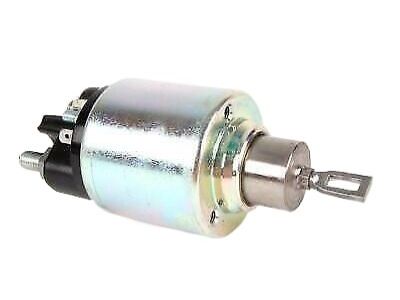
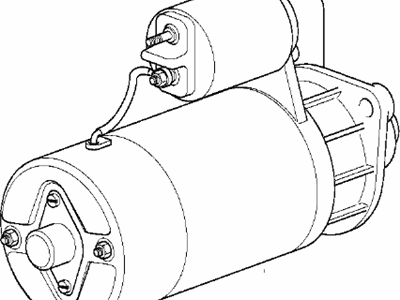
BMW M3 Solenoid Switch
Part Number: 12417515393$116.54 MSRP: $138.97You Save: $22.43 (17%)Ships in 1-3 Business Days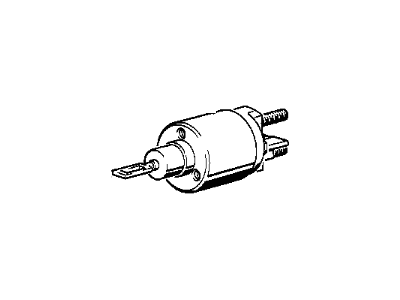
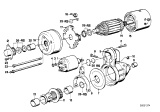
BMW M3 Solenoid Switch
Part Number: 12411726039$141.32 MSRP: $168.97You Save: $27.65 (17%)Ships in 1-3 Business Days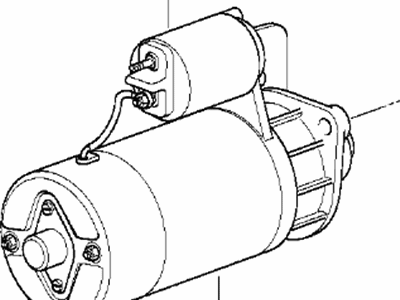
BMW M3 Solenoid Switch
Part Number: 12417836450$95.55 MSRP: $113.94You Save: $18.39 (17%)Ships in 1-3 Business DaysBMW M3 Solenoid Switch
Part Number: 12411427080$116.54 MSRP: $138.97You Save: $22.43 (17%)Ships in 1-3 Business Days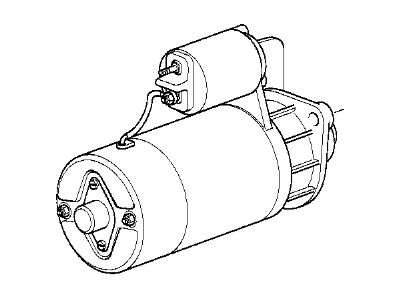
BMW M3 Solenoid Switch
Part Number: 12417832149$141.32 MSRP: $168.97You Save: $27.65 (17%)Ships in 1-3 Business Days
BMW M3 Starter Solenoid
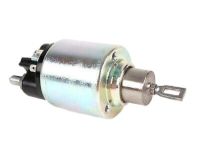
The BMW M3 Starter Solenoid is the critical bridge for any ignition system to allow ignition current to create a liftoff of power from the battery and physically push the starter pinion into the engine ring gear for a quick fire up. Acting like a powerful electromagnetic switch, the Starter Solenoid receives a light signal from the key, snaps heavy contacts shut and shoves high amperage to the starter motor while at the same time pushing the pinion forward so teeth mesh with the flywheel. Once the engine catches and the key is released, the contacts open and the drive retracts to stop the starter instantly. Over the generations of M3 models, there have been two general approaches. Earlier cars of BMW had an inertia Bendix drive in which the rotation from a pinion itself slid into the gear without assistance from a Starter Solenoid linkage, which made engagement slower and sometimes noisy. Later versions applied an integrated Starter Solenoid with a one-way clutch, which provided more reliable, faster engagement and overspeed protection of the motor. These updates imply that every contemporary M3 fires up with briskness as long as the battery remains strong, allowing the BMW Starter Solenoid to perform every start with zero hesitation.
If you are looking for OEM BMW M3 Starter Solenoid, we highly recommend to shop with us. Not only do we offer budget friendly prices, but we also provide fast delivery. In addition, we have a hassle-free return policy on all genuine BMW M3 Starter Solenoid that come backed by the manufacturer's warranty.
BMW M3 Starter Solenoid Parts Questions & Experts Answers
- Q:What is the role of the Starter Solenoid in the battery and starter motor function, and how to troubleshoot and replace on BMW M3?Posted by Carla E.A:To minimize electrical resistance, the battery and starter motor are connected by using heavy gauge electrical cables. From the battery, there is a major power supply wire that goes directly to the starter while smaller gauge wires take care of other electric system needs. The starter engine is a DC type electric machine with its specifically designed construction that leads to great output due to intermittent working and at high speed rate of rotation. Solenoid engaged by the ignition switch pushes forward the starter handle on one end while connecting it to the battery at the other end. At time when "START" is turned on ignition, solenoid plunger moves this gear such that if teeth fit properly; then cranking takes place in an engine. To prevent excessive spinning rate, one-way clutch allows pinion spin faster than starter shaft when starting an engine. So, once you release (key) switch for ignition, this solenoid will be de-energized hence disengaging starter. There are some starters which use separate relay as current controlling device but not all.Starter motor failure can be detected by either no action after key turning or else clicking sound.Including circuit testing, solenoid and cable tests are done for troubleshooting.Starting system removal and installation procedures may vary depending on what kind of engine your vehicle has but generally consist of disconnecting the battery, removing the starter, inspecting it then reinstalling it.Therefore due to wear consistency replacing both solenoids or relays with new starters is recommended.Answered by BMW Parts Specialist Brandon / May 13, 2022
Related BMW M3 Parts
 BMW M3 Alternator
 BMW M3 Starter
 BMW M3 Alternator Pulley
 BMW M3 Alternator Brush
 BMW M3 Starter Brush
 BMW M3 Alternator Bearing
Browse by Year
2013 Starter Solenoid 2012 Starter Solenoid 2011 Starter Solenoid 2010 Starter Solenoid 2009 Starter Solenoid 2008 Starter Solenoid 2006 Starter Solenoid 2005 Starter Solenoid 2004 Starter Solenoid 2003 Starter Solenoid 2002 Starter Solenoid 2001 Starter Solenoid 1999 Starter Solenoid 1998 Starter Solenoid 1997 Starter Solenoid 1996 Starter Solenoid 1995 Starter Solenoid