×
- Hello
- Login or Register
- Quick Links
- Live Chat
- Track Order
- Parts Availability
- RMA
- Help Center
- Contact Us
- Shop for
- BMW Parts
- BMW Accessories

My Garage
My Account
Cart
Genuine BMW Z4 Brake Master Cylinder
- Select Vehicle by Model
- Select Vehicle by VIN
Select Vehicle by Model
orSeries
Model
Year
Select Vehicle by VIN
For the most accurate results, select vehicle by your VIN (Vehicle Identification Number).
3 Brake Master Cylinders found
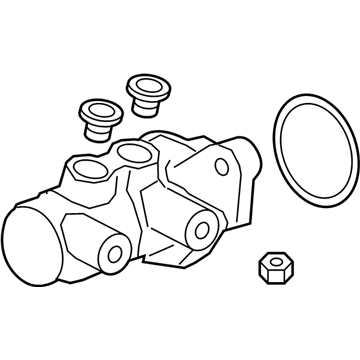
BMW Z4 REPAIR KIT BRAKE MASTER CYLI
Part Number: 34336892205$556.55 MSRP: $775.18You Save: $218.63 (29%)Ships in 1-3 Business Days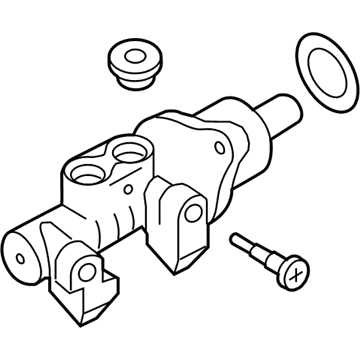
BMW Z4 Brake Master Cylinder
Part Number: 34336786755$501.72 MSRP: $698.81You Save: $197.09 (29%)Ships in 1-3 Business Days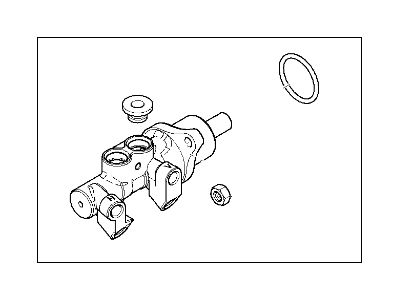
BMW Z4 Brake Master Cylinder
Part Number: 34336785666$599.39 MSRP: $877.31You Save: $277.92 (32%)Ships in 1-3 Business Days
BMW Z4 Brake Master Cylinder
The BMW Z4 Brake Master Cylinder converts your pressure on the brake pedal into hydraulic force to transmit fluid to each of the wheels, providing the roadster its confident stopping power. Inside the unit, paired pistons move back and forth in an aluminum or cast iron bore whose seals and return springs build and release pressure as the pedal travels, but ports maintain sufficient fluid. Since 1967, every BMW has a dual circuit design. This means the Z4 has two separate chambers, which means even if there is a leak in one, the other will slow the car. Two reservoir layouts have served Z4 models, an early integral metal reservoir with a single bail-secured cap and the now common external nylon tank that sits on top with threaded caps and O-ring seals, the latter saving weight and making service much simpler. The Brake Master Cylinder mounts in front of the vacuum booster for direct input by a pushrod. Corrosion or aging seals can let the Brake Master Cylinder leak internally or drip at the firewall, causing a low pedal that signals the Brake Master Cylinder needs attention. Dependable BMW engineering keeps the Brake Master Cylinder reliable when brake fluid stays clean.
If you are looking for OEM BMW Z4 Brake Master Cylinder, we highly recommend to shop with us. Not only do we offer budget friendly prices, but we also provide fast delivery. In addition, we have a hassle-free return policy on all genuine BMW Z4 Brake Master Cylinder that come backed by the manufacturer's warranty.
BMW Z4 Brake Master Cylinder Parts Questions & Experts Answers
- Q:What precautions and steps should be followed before replacing the Brake Master Cylinder on the BMW Z4?Posted by Brooke E.A:As a first step, always adhere to the requirements and the whistle blow before commencing work. With the use of a new brake master cylinder, brake master cylinder retaining nuts will be needed when assembling the vehicle. Should the brake master cylinder be worn out, then it cannot be repaired normally, as BMW considers them to be sealed and their repair kits could not be sourced from the dealers. It is mandatory to change the brake master cylinder O-ring seal and the reservoir seals irrespective of their condition. On models fitted with ABS, while it is sometimes possible to remove the brake master cylinder, loosening the hydraulic fittings will cause air to enter the high-pressure hydraulic system, which can only be safely bled using the BMW dealer or specialist versions of the service tester. Consequently, after installation, the vehicle should be moved to a certified dealer. First, one has to remove the heater/ventilation inlet air ducting if the brake master cylinder is to be removed. The brake pedal should be pushed while the key is in the starting position to empty the brake hydraulic reservoir, the best practice being the use of a syringe or vacuum pump and never use mouth to suck the fluid because of its toxicity. Removing the wiring connector from the brake fluid reservoir and the fluid hose or hoses and fitting the ends to avoid dripping of the fluid. Unscrew the brake master cylinder reservoir retaining screw and gently take out the fluid reservoir while noting to save the seals and also plugging on the cylinder ports. It is necessary to clean the surrounds of the brake line fittings indicating their position before undoing the fitting nuts and pulling the lines and then cover the ends with the plugs or tape to avoid the entry of dirt and to protect it from leaking when taking the vehicle for a test drive. Unbolt the two nuts and washers which hold the brake master cylinder to the power Brake Booster and discard them along with the retaining nuts and prepare a new set of nuts and washers to be fitted. The mating surfaces should then be cleaned with clean rags, a new O-ring inserted and the brake master cylinder slid into position and oriented correctly with regards to the booster pushrod. Tighten the new retaining nuts with adequate force and secure the brake line fittings and reservoir seals then connect the fluid hoses and electrical connections. Last but not least of course is to take the brake master cylinder reservoir and fill it with a new kind of fluid and to bleed the hydraulic system.Answered by BMW Parts Specialist Adrian / Jun 28, 2026
Related BMW Z4 Parts


Browse by Year
2025 Brake Master Cylinder 2024 Brake Master Cylinder 2023 Brake Master Cylinder 2022 Brake Master Cylinder 2021 Brake Master Cylinder 2020 Brake Master Cylinder 2019 Brake Master Cylinder 2016 Brake Master Cylinder 2015 Brake Master Cylinder 2014 Brake Master Cylinder 2013 Brake Master Cylinder 2012 Brake Master Cylinder 2011 Brake Master Cylinder 2010 Brake Master Cylinder 2009 Brake Master Cylinder 2008 Brake Master Cylinder 2007 Brake Master Cylinder 2006 Brake Master Cylinder 2005 Brake Master Cylinder 2004 Brake Master Cylinder 2003 Brake Master Cylinder