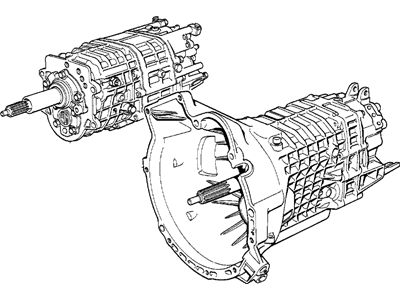
Internal combustion engines produce torque within a specific speed range. Overhead valve pushrod engines typically achieve peak torque around 2500 rpm, often diminishing by 4500 rpm. Overhead camshaft engines generally have a higher, but narrower, torque peak. Manual transmissions and clutches adjust the relationship between engine RPM and wheel speed to ensure adequate power. The clutch gradually applies engine torque to the transmission input shaft due to mechanical slippage, allowing smooth starts from a stop. The transmission modifies the rotational speed ratio between the engine and the wheels using gears, with 4-speed or 5-speed versions being common. Lower gears ensure full engine power reaches the wheels during low-speed acceleration. The clutch driveplate, splined to the transmission input shaft, is coated on both sides with a material similar to brake lining that allows smooth slippage. The clutch cover, attached to the engine flywheel, uses a diaphragm spring to engage the clutch and houses the pressure plate. When the clutch pedal is let go, the driven disc is pressed between the pressure plate and flywheel, making the disc rotate at the engine crankshaft's speed. The transmission features a main shaft that extends from the clutch to the driveshaft, segmented to allow different rotational speeds for its front and rear. Power in lower gears and reverse is transmitted via a countershaft. This countershaft's gears mesh with the mainshaft gears, transferring power between them. Several mainshaft gears either rotate freely or lock to the shaft. Shifting gears releases one and engages another, facilitated by internal dog clutches sliding between the gear's center and the shaft. Forward gears typically use synchronizers to align gear and shaft speeds before the dog clutches engage.