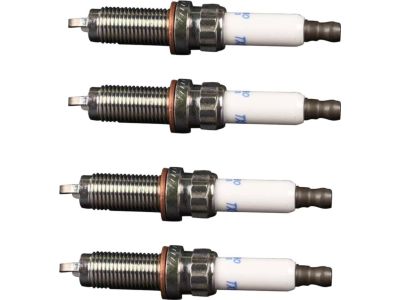
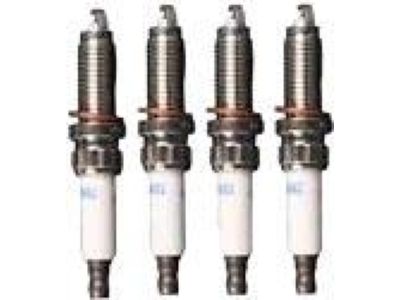
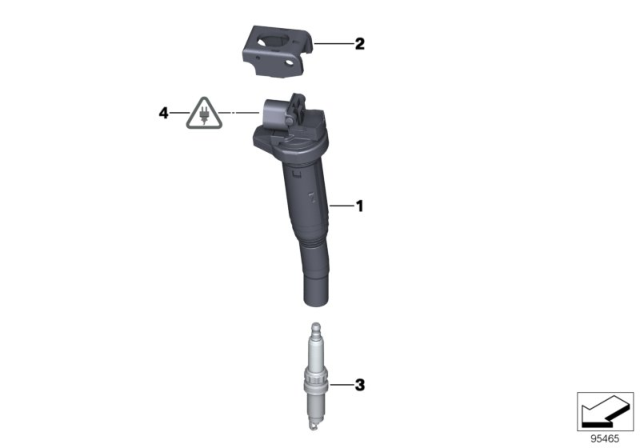
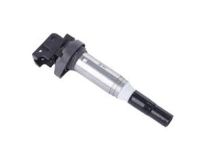
Detach the upper engine cover and, working towards the rear of the engine bay, remove the strut tower brace and bulkhead cowl cover. Now that you have reached the top of the engine, you can access and remove all of the ignition coils and spark plugs. Taking care not to tear the rubber and damage the coil, slide the ignition coil out of the spark plug hole straight, twisting if required. When working with ignition coils, keep them clean. Fuel and oil residue on the ignition coil will break down the electrical resistance and the coil will fail. Blow dirt out of the sparkplug wells with compressed air while wearing eye protection. For a spark plug removal, use a thin walled 12-point 14mm spark plug socket with a universal joint to avoid cracking the insulator. Examine the spark plug electrodes looking for discoloration, wear, and pitting. Light grey means normal combustion, but a big wear spot can suggest a faulty high-pressure fuel injector. Installation refers to the removal process in the reverse order. Do not use any oil or copper based anti-seize on the threads of the spark plug. Do not let the spark plugs drop into the wells as this can reduce the gap of the electrode. Do not use oil or grease on the coil rubbers, talc can be used. Insert the rubber hose into the well to lower the plugs. Thread the plugs into the cylinder head by hand to avoid cross-threading. Finally, tighten the plugs with a torque wrench. Progressively insert the coils into the wells of the plug ensuring that the rubber seal completely surrounds the collar of the plug well. If necessary, gently twist to seat. As you press the electrical connector back into the coil, make sure that the connector catch is open and closed with a click.