×
- Hello
- Login or Register
- Quick Links
- Live Chat
- Track Order
- Parts Availability
- RMA
- Help Center
- Contact Us
- Shop for
- BMW Parts
- BMW Accessories

My Garage
My Account
Cart
Genuine 2007 BMW 335i Batteries
Car Battery- Select Vehicle by Model
- Select Vehicle by VIN
Select Vehicle by Model
orSeries
Model
Year
Select Vehicle by VIN
For the most accurate results, select vehicle by your VIN (Vehicle Identification Number).
11 Batteries found
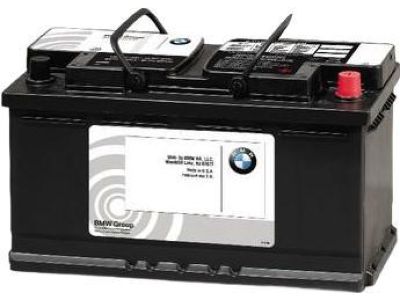
 Product Specifications
- Replaced by: 61212353817
- Item Weight: 5.40 Pounds
- Condition: New
- SKU: 61212353806
- Warranty: This genuine part is guaranteed by BMW's factory warranty.
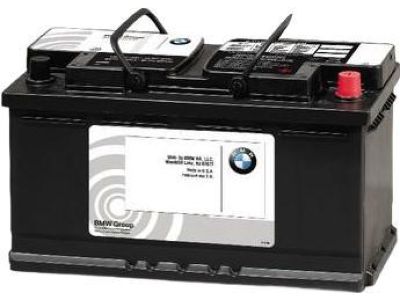 Product Specifications
- Item Weight: 7.40 Pounds
- Condition: New
- SKU: 61212353808
- Warranty: This genuine part is guaranteed by BMW's factory warranty.
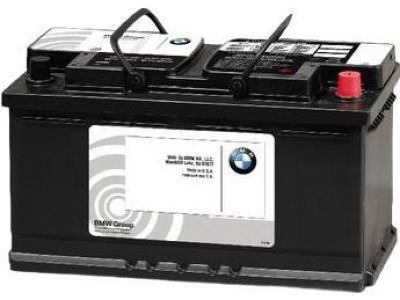
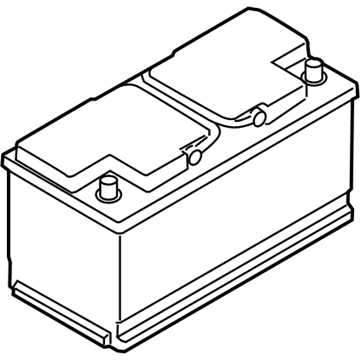 Product Specifications
- Replaced by: 61215A40E19
- Item Weight: 7.20 Pounds
- Condition: New
- SKU: 61212353811
- Warranty: This genuine part is guaranteed by BMW's factory warranty.
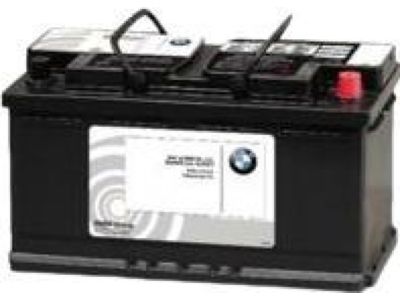 Product Specifications
- Replaced by: 61215A40E31
- Item Weight: 7.80 Pounds
- Condition: New
- SKU: 61212353813
- Warranty: This genuine part is guaranteed by BMW's factory warranty.
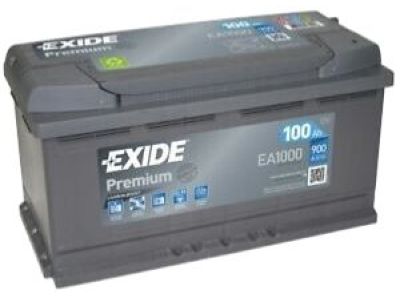
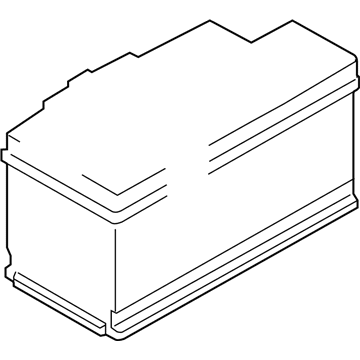
2007 BMW 335i Battery, Manuf.: Exide (Warranty Only)
Part Number: 61217586962$139.89 MSRP: $158.33You Save: $18.44 (12%)Product Specifications- Other Name: Battery
- Replaces: 61-21-6-946-334
- Item Weight: 28.40 Pounds
- Condition: New
- SKU: 61217586962
- Warranty: This genuine part is guaranteed by BMW's factory warranty.
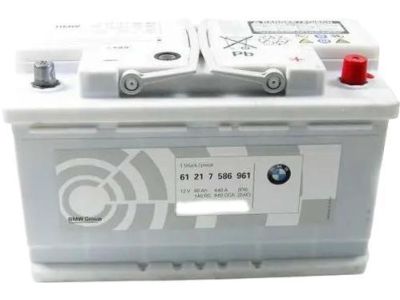
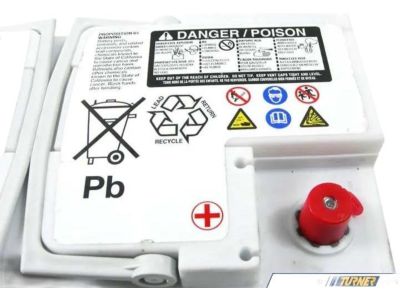
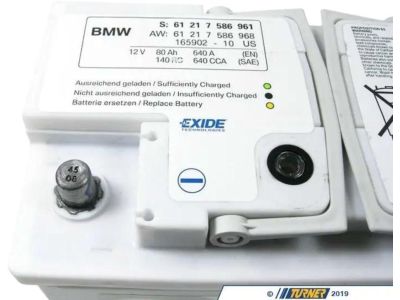
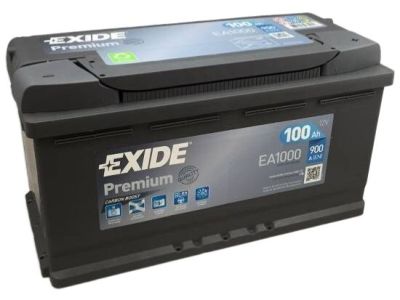
2007 BMW 335i Battery, Manuf.: Exide (Warranty Only)
Part Number: 61217586961$139.89 MSRP: $158.33You Save: $18.44 (12%)Product Specifications- Other Name: Battery
- Replaces: 61-21-6-946-333
- Item Weight: 29.50 Pounds
- Condition: New
- SKU: 61217586961
- Warranty: This genuine part is guaranteed by BMW's factory warranty.
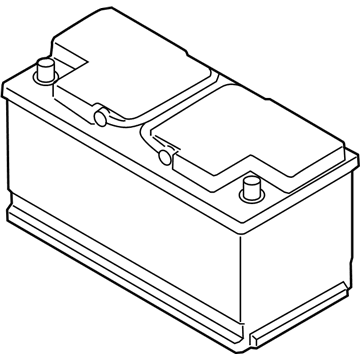 Product Specifications
- Replaced by: 61215A40E29
- Item Weight: 9.60 Pounds
- Condition: New
- SKU: 61212353812
- Warranty: This genuine part is guaranteed by BMW's factory warranty.
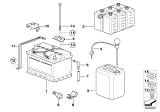
2007 BMW 335i Battery, Manuf.: Douglas (Warranty Only)
Part Number: 61218381738$103.15 MSRP: $123.00You Save: $19.85 (17%)Product Specifications- Other Name: Battery
- Item Weight: 30.10 Pounds
- Condition: New
- SKU: 61218381738
- Warranty: This genuine part is guaranteed by BMW's factory warranty.
2007 BMW 335i Battery, Manuf.: Douglas (Warranty Only)
Part Number: 61218381749$114.05 MSRP: $136.00You Save: $21.95 (17%)Product Specifications- Other Name: Battery
- Item Weight: 28.70 Pounds
- Condition: New
- SKU: 61218381749
- Warranty: This genuine part is guaranteed by BMW's factory warranty.
2007 BMW 335i Battery, Manuf.: Douglas (Warranty Only)
Part Number: 61218381762$119.15 MSRP: $144.50You Save: $25.35 (18%)Product Specifications- Other Name: Battery
- Replaces: 61-21-8-361-827
- Item Weight: 27.90 Pounds
- Condition: New
- SKU: 61218381762
- Warranty: This genuine part is guaranteed by BMW's factory warranty.
2007 BMW 335i Battery, Manuf.: Exide (Warranty Only)
Part Number: 61217586960$174.96 MSRP: $218.41You Save: $43.45 (20%)Product Specifications- Other Name: Battery
- Replaces: 61-21-6-946-332
- Item Weight: 30.10 Pounds
- Condition: New
- SKU: 61217586960
- Warranty: This genuine part is guaranteed by BMW's factory warranty.
2007 BMW 335i Batteries
Are you in need of a high-quality yet affordable OEM 2007 BMW 335i Batteries? Look no further. Our website boasts an extensive selection of genuine 2007 BMW 335i Batteries, all priced competitively. Plus, our top-notch customer service and speedy delivery options ensure a seamless shopping experience for you.
2007 BMW 335i Batteries Parts Questions & Experts Answers
- Q:How to perform a parasitic draw test on the batteries of a 2007 BMW 335i?Posted by Dec L.A:If the vehicle battery is discharged for an unknown reason, perform the parasitic draw test designed to detect excessive current flow from the battery when everything in the vehicle is shut down, also known as a closed circuit current measurement. Check that battery voltage is 12 volts or higher and if lower, recharge battery. Remove negative cable and install battery isolation switch (OTC tool 7645 or equivalent). Close switch and connect digital multimeter in series across switch, setting meter to milliamp (mA) scale. Turn trunk lock to locked position using screwdriver or similar to simulate trunk lid being closed and keep all other doors and lids closed. To simulate normal parasitic draw conditions, switch ignition ON and activate all electrical consumers, including any accessories. Switch ignition OFF, open and close driver's door to simulate somebody getting out and lock car, arming alarm if installed. Open battery isolation switch and monitor current draw. For a vehicle without telematics (TCU), wait 30 minutes and for a vehicle with telematics (TCU), wait 60 - 70 minutes. The maximum allowable parasitic draw after waiting is approximately 40 mA. If draw exceeds maximum allowable, find consumer(s) at fault by removing individual fuses and noting change in parasitic draw. Repair or replace component(s) found at fault. Fuse locations and applications are in ECL Electrical Component Locations.Answered by BMW Parts Specialist Adrian / Oct 03, 2025
Related 2007 BMW 335i Parts
 2007 BMW 335i Battery Cable
 2007 BMW 335i Fuse Box
 2007 BMW 335i Automatic Transmission Shifter
 2007 BMW 335i Battery Fuse
 2007 BMW 335i Battery Vent Tube
 2007 BMW 335i Engine Mount Bracket
 2007 BMW 335i Automatic Transmission Shift Levers
 2007 BMW 335i Back Glass Lift Support
 2007 BMW 335i Back Up Light
 2007 BMW 335i Back Up Light Switch