×
- Hello
- Login or Register
- Quick Links
- Live Chat
- Track Order
- Parts Availability
- RMA
- Help Center
- Contact Us
- Shop for
- BMW Parts
- BMW Accessories

My Garage
My Account
Cart
Genuine BMW M3 Pilot Bearing
Clutch Pilot Bearing- Select Vehicle by Model
- Select Vehicle by VIN
Select Vehicle by Model
orSeries
Model
Year
Select Vehicle by VIN
For the most accurate results, select vehicle by your VIN (Vehicle Identification Number).
3 Pilot Bearings found
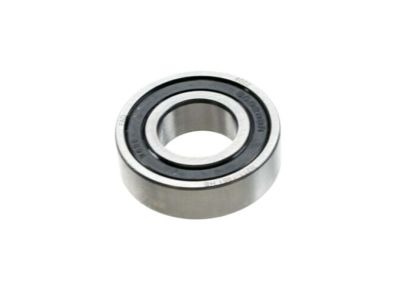
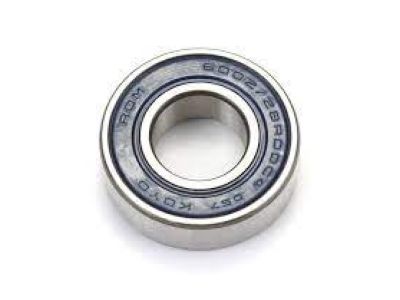
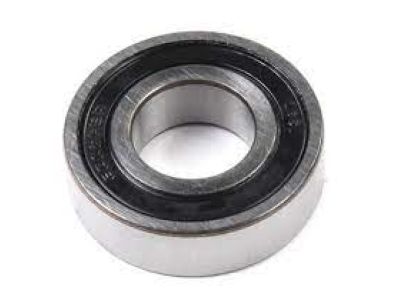
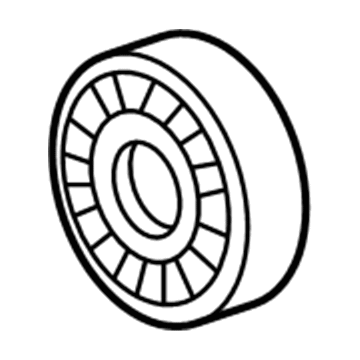
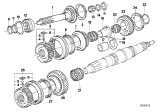
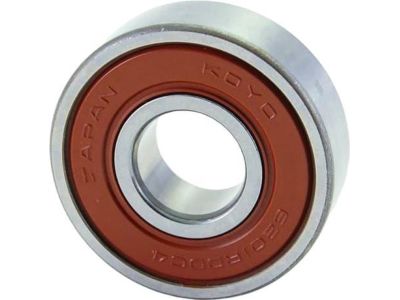
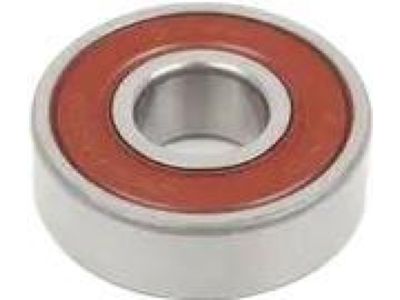
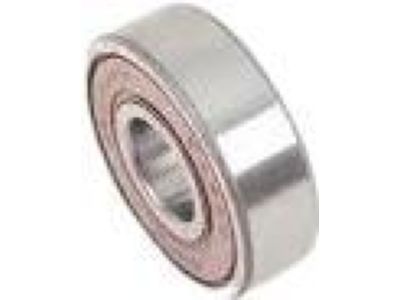
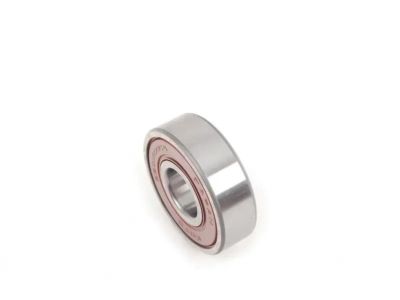
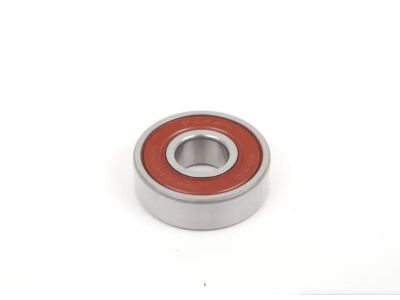
BMW M3 Pilot Bearing
The BMW M3 Pilot Bearing keeps the input shaft of the transmission perfectly centered, reducing friction and keeping gear changes crisp. Positioned in the crankshaft nose or placed in the flywheel, the Pilot Bearing supports the shaft to spin freely from the radial and axial forces as the clutch engages to reduce heat and wear to the shaft that would otherwise sap power. Across generations, two primary styles were utilized by BMW to accomplish the task. The compact roller or needle Pilot Bearing style is for heavier load capacity, and a sintered bronze bushing style Pilot Bearing depends on an oil-impregnated surface to float the shaft on a thin film of lubricant. Early M3 editions often featured the bronze version, and later models preferred the roller version for greater durability. This evolution is due to the increased engine outputs and the search for smoother daily driving. Regardless of style, when a Pilot Bearing begins to fail, drivers will hear growling sounds, experience vibration when the clutch is engaged, and reluctant shifts are obvious indicators that replacement is needed immediately to protect BMW performance and extend M3 drivetrain life.
If you are looking for OEM BMW M3 Pilot Bearing, we highly recommend to shop with us. Not only do we offer budget friendly prices, but we also provide fast delivery. In addition, we have a hassle-free return policy on all genuine BMW M3 Pilot Bearing that come backed by the manufacturer's warranty.
BMW M3 Pilot Bearing Parts Questions & Experts Answers
- Q:What is the purpose and location of the pilot bearing in a BMW M3's transmission system?Posted by Cheden C.A:The pilot bearing is located at the end of the crankshaft and supports the transmission input shaft to maintain alignment. If the bearing seizes, the clutch will not disengage properly and the transmission may grind or fail to shift into gear. In some cases, replacing the pilot bearing can resolve transmission issues. It is recommended to replace the pilot bearing when replacing the clutch and release bearing. If the bearing is a sealed roller bearing, it cannot be serviced and must be replaced if defective. During inspection, check for excessive play, roughness, or binding in the inner race of the bearing. If any of these symptoms are present, or if the bearing is physically damaged or rusty, it should be replaced. The pilot bearing is considered a wear item and should be replaced whenever the clutch disk and Pressure Plate are replaced. To remove and install the bearing, remove the transmission and clutch assembly. Use a bearing puller and slide hammer to remove the bearing, noting the order of washers and spacers. Clean the crankshaft bore and inspect the bearing for reuse. Lubricate the cleaned or new bearing with approved grease and drive it into the crankshaft bore using a suitable driver or a socket and hammer. If applicable, install the washers and spacers onto the crankshaft and clean any excess grease. Finally, install the clutch and transmission assemblies.Answered by BMW Parts Specialist Blaine / Apr 27, 2026
Related BMW M3 Parts
 BMW M3 Pressure Plate
 BMW M3 Clutch Master Cylinder
 BMW M3 Clutch Slave Cylinder
 BMW M3 Clutch Disc
 BMW M3 Release Bearing
 BMW M3 Clutch Fork
 BMW M3 Clutch Slave Repair Kit
Browse by Year
2013 Pilot Bearing 2012 Pilot Bearing 2011 Pilot Bearing 2010 Pilot Bearing 2009 Pilot Bearing 2008 Pilot Bearing 2006 Pilot Bearing 2005 Pilot Bearing 2004 Pilot Bearing 2003 Pilot Bearing 2002 Pilot Bearing 2001 Pilot Bearing 1999 Pilot Bearing 1998 Pilot Bearing 1997 Pilot Bearing 1996 Pilot Bearing 1995 Pilot Bearing 1991 Pilot Bearing 1990 Pilot Bearing 1989 Pilot Bearing 1988 Pilot Bearing