×
- Hello
- Login or Register
- Quick Links
- Live Chat
- Track Order
- Parts Availability
- RMA
- Help Center
- Contact Us
- Shop for
- BMW Parts
- BMW Accessories

My Garage
My Account
Cart
Genuine BMW X5 Idle Control Valve
IACV- Select Vehicle by Model
- Select Vehicle by VIN
Select Vehicle by Model
orSeries
Model
Year
Select Vehicle by VIN
For the most accurate results, select vehicle by your VIN (Vehicle Identification Number).
1 Idle Control Valve found
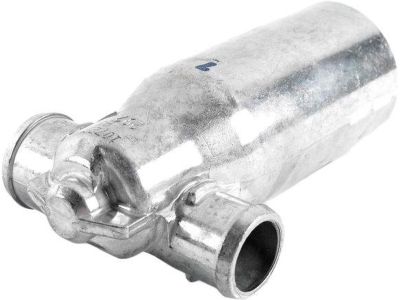
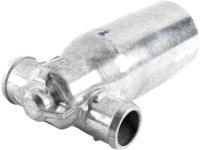
BMW X5 T-Shape Idle Regulating Valve
Part Number: 13411744713$410.77 MSRP: $558.24You Save: $147.47 (27%)Ships in 1-3 Business Days
BMW X5 Idle Control Valve
The BMW X5 Idle Control Valve is responsible for keeping the engine idling smoothly by allowing only enough air to slip around the closed throttle plate. Guided by signals from the ECU, this small BMW unit uses a digitally driven plunger and lead screw motor to fine-tune the airflow so that the engine doesn't stall when headlights, air conditioning, or steering add extra load. This Idle Control Valve arrangement keeps the engine running at a steady rpm in every variant of the X5. Early versions featured an Idle Control Valve that solely bypassed air, but later X5 editions have a smarter servo design that actually nudges the throttle butterfly itself to provide faster corrections and cleaner emissions more fitting to BMW performance ideals. Both styles keep BMW engines calm, but they are different in method. The bypass type just meters air around the plate while the direct actuation setup can swing the plate for broader authority. Symptoms of trouble are hunting idle or sudden stalls, usually attributed to dirt clogging the Idle Control Valve, leaks in its hoses, or a worn motor. Cleaning gets it working, but a failed motor means swapping the Idle Control Valve to regain the factory smooth idle BMW expects out of every X5.
If you are looking for OEM BMW X5 Idle Control Valve, we highly recommend to shop with us. Not only do we offer budget friendly prices, but we also provide fast delivery. In addition, we have a hassle-free return policy on all genuine BMW X5 Idle Control Valve that come backed by the manufacturer's warranty.
BMW X5 Idle Control Valve Parts Questions & Experts Answers
- Q:What is the function and replacement procedure for the idle control valve on the BMW X5?Posted by Lisa J.A:The Idle Control Valve is positioned just above the throttle housing and controls the idle speed by drawing air by-pass round the throttle valve and is supplied with battery voltage from the DME main relay. There is only a two-coil rotary actuator; the ground sides of each coil are pulsed by the ECM, with variable duty cycle to achieve the desired idle speed. An abnormal valve results in an OTC and if the OBD II fault parameters are met, the MIL comes on. First, remove the battery cables where they enter the cargo compartment, and, having read the battery disconnection cautions first, pull the negative one. Subsequently, it will be necessary to pull off the whole air filter housing and the air intake ducts. On the side of the Intake Manifold, remove the electrical connector plugs for both intake manifold resonance valve and for the Idle Control Valve. Take off the upper wiring harness housing mounting fastener and move the harness housing backward slightly. Next, the Idle Control Valve mounting bracket screws are removed, as is the idle regulator coupled to the intake manifold via a rubber grommet that also acts as a vacuum gasket. After that, the Idle Control Valve must be pressed into the manifold; on it, the rubber grommet is put on, and the inside must be coated with assembly lubricant. Last of all, reconnect the wiring harnesses and replace the air filter assembly and ducts on the vehicle and read the codes from the ECM and clear and reset its memory.Answered by BMW Parts Specialist Javier / Aug 07, 2023