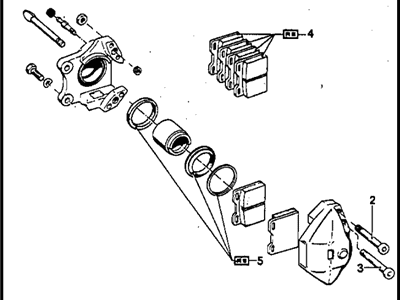
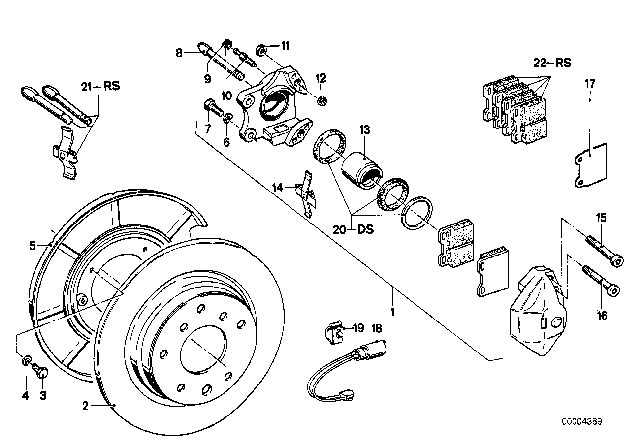
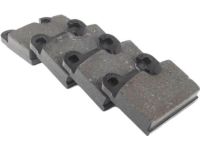
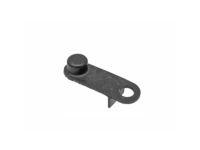
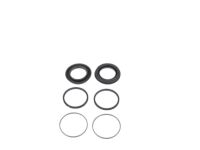
To remove and refit the caliper, raise and safely support the front of the car, then remove the road wheel. If detaching the caliper for access to other components, remove the two mounting bolts and the nut to disconnect the brake line connector, then carefully lift the caliper with the connected brake lines from the suspension strut and wire it to the inside of the wheel arch to avoid straining the brake pipes and hoses. For dismantling, plug the fluid reservoir outlets, remove the brake pads, and then take out the mounting bolts and disconnect the brake pipes before lifting the caliper from the suspension. Refit the caliper in reverse order, and if the brake pipes were disconnected, bleed the brake upon completion. For an overhaul, clean the caliper's exterior, ensuring not to mix parts if two calipers are being serviced simultaneously. The calipers should remain bolted together unless internal seal leakage is detected. Remove clamp rings and dust covers from the pistons, using low-pressure compressed air to eject the pistons carefully. Use a suitable rod to extract the piston seals without damaging the bores. If internal seal leaks are found, remove the bolts holding the caliper halves, replace the seals, and discard the old bolts. Clean all parts with approved solvents, inspect for wear or damage, and replace any faulty components. Before reassembly, dip internal parts in clean brake fluid or apply ATE brake cylinder paste, then use new rubber parts and expansion bolts if the halves were separated. Ensure seals are fully seated, fit the pistons, and install new dust covers with clamp rings. After refitting the caliper, install the brake pads. For brake disc removal, detach it along with the front hub assembly using a hexagonal key to remove the fixing bolts. If the disc is rusted, reattach the hub assembly to the road wheel, lay the wheel with the disc facing up, and stand on it while twisting and pulling the disc off. Avoid hammering the disc to prevent damage. When refitting, lightly tap the disc onto the hub using a wooden block for cushioning, then tighten the retaining bolts alternately and evenly to the specified torque, lubricate the hub bearings, and refit the assembly.