×
- Hello
- Login or Register
- Quick Links
- Live Chat
- Track Order
- Parts Availability
- RMA
- Help Center
- Contact Us
- Shop for
- BMW Parts
- BMW Accessories

My Garage
My Account
Cart
Genuine BMW 2002 Starter
Starter Ignition- Select Vehicle by Model
- Select Vehicle by VIN
Select Vehicle by Model
orSeries
Model
Year
Select Vehicle by VIN
For the most accurate results, select vehicle by your VIN (Vehicle Identification Number).
2 Starters found
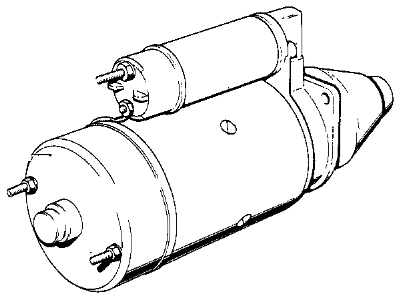
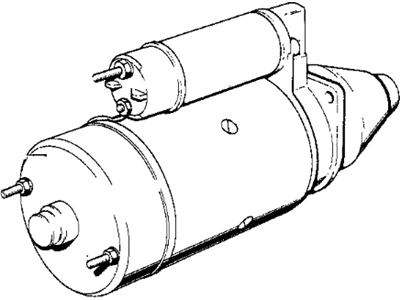
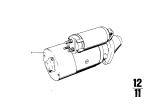
BMW 2002 Starter
The BMW 2002 Starter provides essential torque to the crankshaft to ensure the fast and safe start of the engine. This Starter draws battery voltage through a heavy cable and stout solenoid with a resultant current flowing through the case-mounted field coils, which creates magnetic force that swings an armature to whirl over its drive gear. The drive is simultaneously introduced to the flywheel ring gear by the solenoid. By allowing the gear to withdraw after the motor fires, an overrunning clutch saves the mechanism. The models from early 2002 utilized a traditional direct-drive Starter design. Later models were designed with a gear-reduction Starter that adds a small planetary gear set between the armature and drive. This way, they achieved the same turning force with a lighter and more compact unit. All Starter types depend on the ignition switch, relay, and neutral or clutch safety switches which prevent engagement when the car is in gear. This basic circuit keeps starting predictable for every BMW driver. Every Starter in the BMW family efficiently converts electrical energy into mechanical rotation which has played its part in the lasting legend of the 2002.
If you are looking for OEM BMW 2002 Starter, we highly recommend to shop with us. Not only do we offer budget friendly prices, but we also provide fast delivery. In addition, we have a hassle-free return policy on all genuine BMW 2002 Starter that come backed by the manufacturer's warranty.
BMW 2002 Starter Parts Questions & Experts Answers
- Q:What are the recommended servicing operations for a starter motor on BMW 2002?Posted by Lasha J.A:Servicing operations should be limited to the renewal of brushes, the solenoid, the overhaul of the starter drive gear, and cleaning the commutator. The major components of the starter are designed to last the life of the unit, and in the event of failure, a factory exchange replacement should be obtained. Begin by disconnecting the motor field winding lead from the solenoid terminal, then remove the screws securing the solenoid to the drive end cover while unhooking it from the drive engagement lever. Next, take off the dust cap from the starter and extract the lock washer, shims, and gasket. Unscrew the tie bolts to withdraw the motor end cover, then extract the carbon brushes from their holders and remove the brush mounting plate. Withdraw the yoke from the drive end cover and unscrew the engagement lever pivot bolt before removing the armature complete with the engagement lever. Use suitable tubing to drive the stop ring back up the armature shaft to expose the jump ring, then extract the jump ring and pull off the starter drive components. Measure the overall length of each brush, and if they are worn below the minimum recommended length, renew them by unsoldering and resoldering, ensuring each brush slides freely in its holder. Clean any accumulated carbon dust or grease from the holder with a fuel-moistened rag. The commutator can be cleaned by holding a non-fluffy rag moistened with fuel against it while rotating by hand. If the mica separators are level with the copper segments, they must be undercut by between 0.020 and 0.032 inches (0.5 to 0.8 mm) using an old hacksaw blade ground to suit, and the commutator can be polished with very fine glass paper, avoiding emery cloth. Wash the components of the drive gear in paraffin and inspect for wear or damage, particularly to the pinion teeth, renewing as appropriate. Refitting is a reversal of dismantling, and oil the sliding surfaces of the pinion assembly with a light oil, applied sparingly. The end float of the armature must be between 0.004 and 0.06 inches (0.1 and 0.15 mm), which can be adjusted by varying the shims located under the starter dust cap.Answered by BMW Parts Specialist Armando / Oct 30, 2023