×
- Hello
- Login or Register
- Quick Links
- Live Chat
- Track Order
- Parts Availability
- RMA
- Help Center
- Contact Us
- Shop for
- BMW Parts
- BMW Accessories

My Garage
My Account
Cart
Genuine BMW M3 Transmission Assembly
Trans Assembly- Select Vehicle by Model
- Select Vehicle by VIN
Select Vehicle by Model
orSeries
Model
Year
Select Vehicle by VIN
For the most accurate results, select vehicle by your VIN (Vehicle Identification Number).
51 Transmission Assemblies found
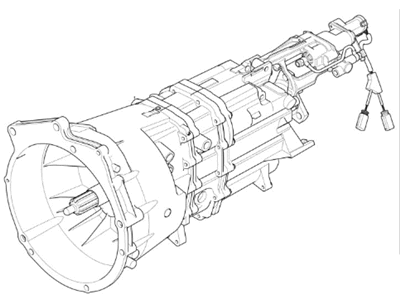
BMW M3 Exchange 6 Speed Sequential Gearbox
Part Number: 23002229786$12995.50 MSRP: $16264.30You Save: $3268.80 (21%)Ships in 1-3 Business Days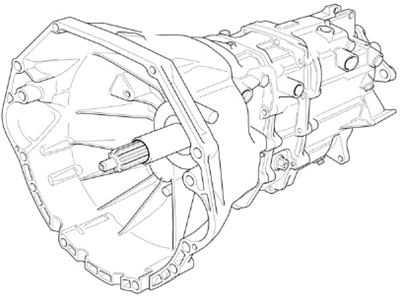
BMW M3 Exchange 6 Speed Gearbox
Part Number: 23002229721$14751.28 MSRP: $18461.71You Save: $3710.43 (21%)Ships in 1-3 Business Days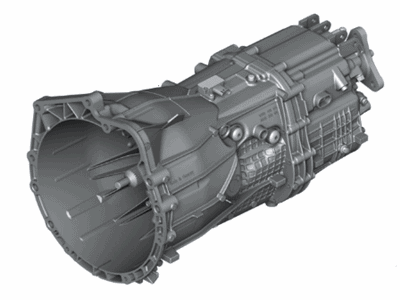
BMW M3 Exchange 6 Speed Gearbox
Part Number: 23007858801$5189.01 MSRP: $6531.04You Save: $1342.03 (21%)Ships in 1-3 Business Days
BMW M3 RP 6-SPEED TRANSMISSION
Part Number: 23009501831$6216.87 MSRP: $7832.10You Save: $1615.23 (21%)Ships in 1-3 Business Days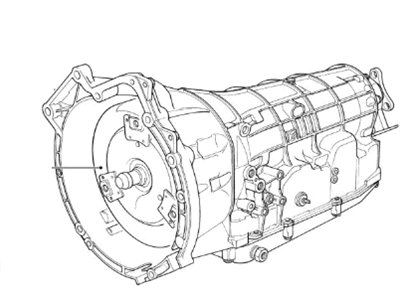
BMW M3 Exchange Automatic Transmission Eh
Part Number: 24001421947$6466.04 MSRP: $8710.52You Save: $2244.48 (26%)Ships in 1-3 Business Days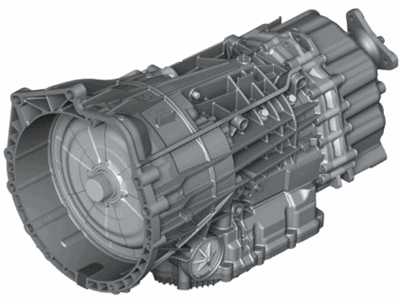
BMW M3 DUAL-CLUTCH TRANSMISSION
Part Number: 28007853557$11784.27 MSRP: $14965.29You Save: $3181.02 (22%)Ships in 1-3 Business Days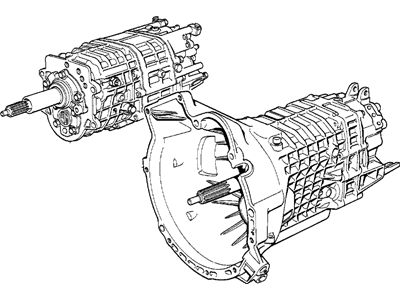
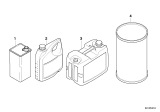
BMW M3 Exchange 5 Speed (Overdrive) Gearbox
Part Number: 23001221327$4891.40 MSRP: $6116.49You Save: $1225.09 (21%)Ships in 1-3 Business Days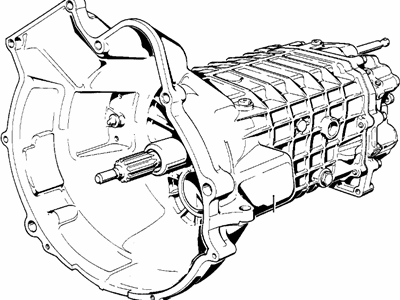
BMW M3 Exchange 5 Speed (Overdrive) Gearbox
Part Number: 23001222035$6111.87 MSRP: $7643.96You Save: $1532.09 (21%)Ships in 1-3 Business Days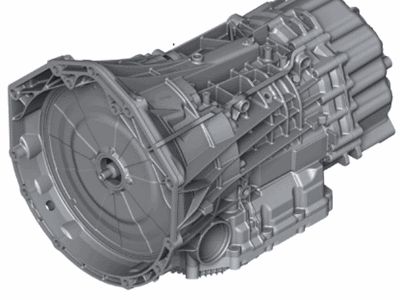
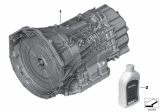
BMW M3 RP DOUBLE-CLUTCH TRANSMISSIO
Part Number: 28007843004$11822.39 MSRP: $14965.29You Save: $3142.90 (21%)Ships in 1-3 Business Days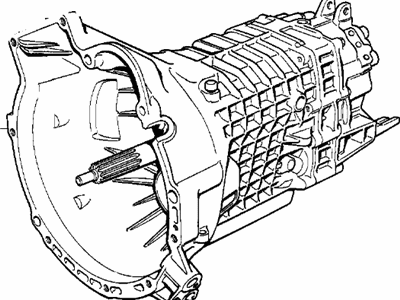
BMW M3 Exchange 5 Speed (Overdrive) Gearbox
Part Number: 23001221205$4984.46 MSRP: $6232.96You Save: $1248.50 (21%)Ships in 1-3 Business Days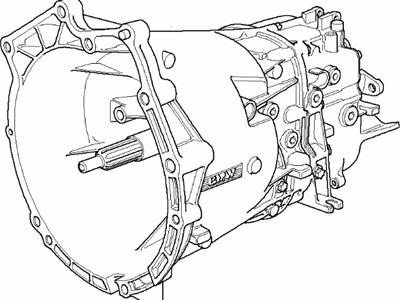
BMW M3 RP 5-SPEED TRANSMISSION
Part Number: 23001222997$4524.71 MSRP: $5628.71You Save: $1104.00 (20%)Ships in 1-3 Business Days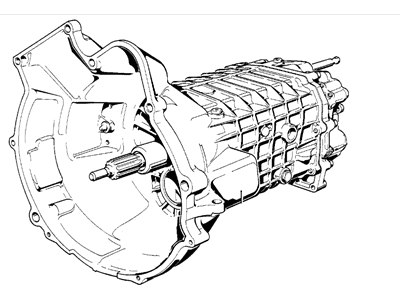
BMW M3 EXCHANGE 5 SPEED (OVERDRIVE)
Part Number: 23001221639$3098.47 MSRP: $4241.40You Save: $1142.93 (27%)Ships in 1-3 Business Days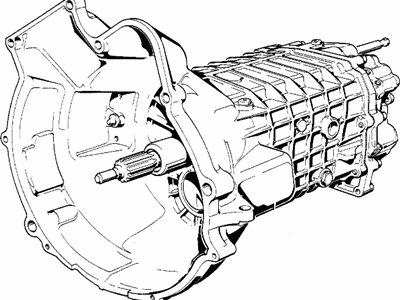
BMW M3 Exchange 5 Speed (Sport) Gearbox
Part Number: 23001221842$6860.67 MSRP: $9251.50You Save: $2390.83 (26%)Ships in 1-3 Business Days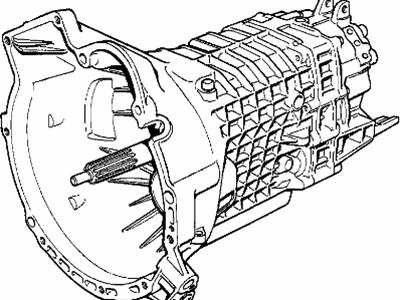
BMW M3 Exchange 5 Speed (Overdrive) Gearbox
Part Number: 23001220592$4891.40 MSRP: $6116.49You Save: $1225.09 (21%)Ships in 1-3 Business DaysBMW M3 Exchange 5 Speed (Overdrive) Gearbox
Part Number: 23001220374$4891.40 MSRP: $6116.49You Save: $1225.09 (21%)Ships in 1-3 Business Days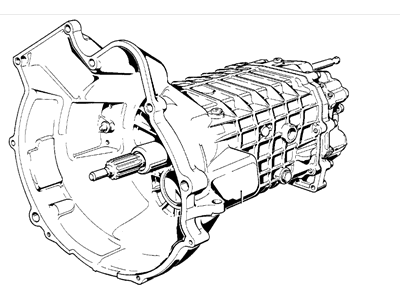
BMW M3 Exchange 5 Speed (Sport) Gearbox
Part Number: 23001221632$7451.36 MSRP: $9320.36You Save: $1869.00 (21%)Ships in 1-3 Business Days
BMW M3 Exchange 5 Speed (Sport) Gearbox
Part Number: 23001221631$7451.36 MSRP: $9320.36You Save: $1869.00 (21%)Ships in 1-3 Business Days
BMW M3 RP AUTOMATIC TRANSMISSION
Part Number: 24005A90063$12700.42 MSRP: $16065.81You Save: $3365.39 (21%)Ships in 1-2 Business Days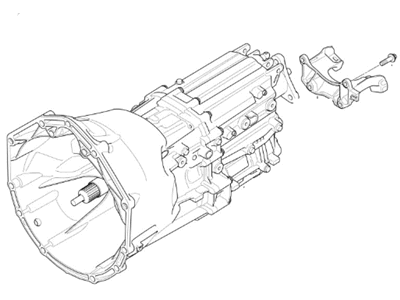
BMW M3 Exchange 6 Speed Gearbox
Part Number: 23002283601$5235.39 MSRP: $6648.62You Save: $1413.23 (22%)Ships in 1-3 Business Days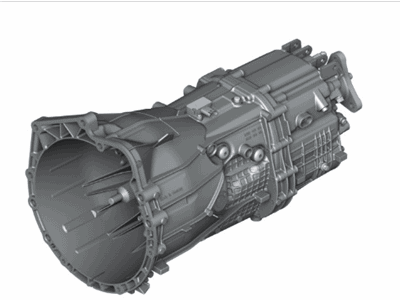
BMW M3 6-Speed Manual Transmission
Part Number: 23007858800$6216.87 MSRP: $7832.10You Save: $1615.23 (21%)
| Page 1 of 3 |Next >
1-20 of 51 Results
BMW M3 Transmission Assembly
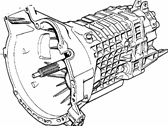
The BMW M3 Transmission Assembly allows the car to convert raw engine torque into controlled motion. This enables drivers to enjoy smooth acceleration and the appropriate power for every speed. At its heart, this Transmission Assembly is responsible for channeling force from the crankshaft to the wheels via selectable gear ratios. This allows the engine to spin faster for climbing and relax for cruising. Across the generations, the BMW M3 has provided a number of Transmission Assembly styles based on the same target of matching torque to requirements on the road. Traditional six-speed manuals have parallel shafts and driver-select gears when direct feel is desired, while automated ones replace pedals with computers. The dual-clutch version combines two clutches with fast electronic control to allow shifts to occur faster than the blink of an eye, but with the gearsets as opposed to the belts and pulleys of a continuously variable unit. Despite the differences in hardware, all types of Transmission Assembly ensure that lubrication is maintained using dedicated fluid and that clear signals, such as grinding or slipping, alert drivers to problems from the start. Ignoring those alerts runs the risk of total Transmission Assembly failure and renders the vehicle incapable of moving in order for the BMW M3 to remain ready for the road.
If you are looking for OEM BMW M3 Transmission Assembly, we highly recommend to shop with us. Not only do we offer budget friendly prices, but we also provide fast delivery. In addition, we have a hassle-free return policy on all genuine BMW M3 Transmission Assembly that come backed by the manufacturer's warranty.
BMW M3 Transmission Assembly Parts Questions & Experts Answers
- Q:How to remove and install Automatic Transmission Assembly on BMW M3?Posted by Marl M.A:All tasks related to transmission removal and installation on different BMW models need two essential components, transmission support and specialized tools for driveshaft locking ring torque. Start the procedure by disconnecting the battery cable along with taking off throttle nuts from the adjusting position and removing the tether. Start the process by taking out the exhaust system with heat shield while draining transmission oil through disconnecting the oil cooler lines. Start by supporting the transmission before you detach its torque converter housing from its position and remove all bolts linking the torque converter to the drive plate. Discharge the speed and reference mark sensors while disconnecting their electrical connector then support the transmission with a jack. First disconnect the transmission shift rod before you take out the driveshaft and lower the transmission to access the engine bolts. Installation of the converter requires correct engagement as well as securing the driveshaft lock-ring followed by installing self-locking nuts and preloading the center mount and reconnecting the electrical connector. Adjust throttle cables first before you align the transmission to the engine and check the condition of flexplate components and dowel sleeves. You must install the shifter cable after bolt torque and then fit the driveshaft before fluid addition into the transmission unit. Place the gear selector lever in P position first before holding the bolt located on the transmission shift lever for shift linkage cable and rod adjustments. The final step requires an adjustment of the throttle linkage for proper function and safe distance from the throttle body.Answered by BMW Parts Specialist Chaz / Oct 03, 2023
Related BMW M3 Parts


Browse by Year
2024 Transmission Assembly 2023 Transmission Assembly 2022 Transmission Assembly 2021 Transmission Assembly 2018 Transmission Assembly 2017 Transmission Assembly 2016 Transmission Assembly 2015 Transmission Assembly 2013 Transmission Assembly 2012 Transmission Assembly 2011 Transmission Assembly 2010 Transmission Assembly 2009 Transmission Assembly 2008 Transmission Assembly 2006 Transmission Assembly 2005 Transmission Assembly 2004 Transmission Assembly 2003 Transmission Assembly 2002 Transmission Assembly 2001 Transmission Assembly 1999 Transmission Assembly 1998 Transmission Assembly 1997 Transmission Assembly 1996 Transmission Assembly 1995 Transmission Assembly 1991 Transmission Assembly 1990 Transmission Assembly 1989 Transmission Assembly 1988 Transmission Assembly